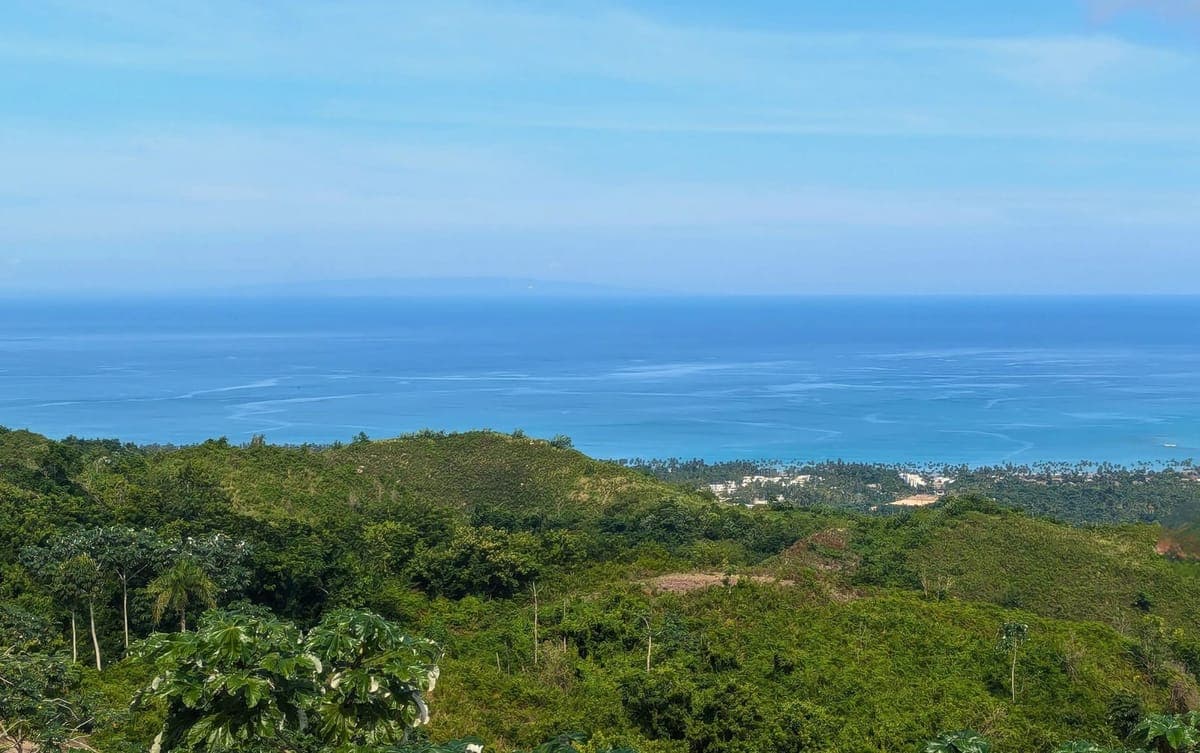
Discover how to retire in the Dominican Republic on $2,500-$4,000/month with healthcare costs 60-70% lower than the US. From residency visas to expat communities, here's everything you need to know.
Is the Dominican Republic Right for Your Retirement?
Are you tired of paying $800/month for health insurance while dreaming of ocean views and year-round sunshine? If you're among the 10,000+ North Americans who've already made the move to retire in the Dominican Republic, you know the secret: quality Caribbean living doesn't have to drain your retirement savings.
Here's the reality — retiring in the DR isn't just about escaping winter anymore. It's about stretching your retirement dollars 40-60% further while maintaining (and often improving) your quality of life. With healthcare costs 60-70% lower than the US, property taxes that can legally be zero for 15 years through CONFOTUR, and a thriving international community of 6,000+ expats in Las Terrenas alone, the Dominican Republic has become the thinking person's retirement destination.
In this guide, I'll walk you through exactly what it costs to retire comfortably in the DR, how to navigate the residency visa process (it's simpler than you think), and what daily life actually looks like for retirees in communities like Las Terrenas. By the end, you'll know whether this is the right move for you — and your next steps if it is.
Retiring in the Dominican Republic at a Glance
Monthly cost of living in Las Terrenas (2026 estimates)
| Budget | Household | Monthly total | Biggest costs |
|---|---|---|---|
| Conservative | Single, renting a 1-bedroom | $2,500 | Rent $1,000 · food $400 · healthcare $300 |
| Comfortable | Couple, renting a 2-bedroom | $3,800 | Rent $1,800 · food $600 · healthcare $450 |
| Luxurious | Couple, owning a villa | $6,000+ | Dining $1,200 · travel $1,000 · villa running costs $800 |
Residency options for retirees
| Route | Main requirement | Processing | Approx. cost | What you get |
|---|---|---|---|---|
| Pensioner / Rentista | Pension of $1,500+/month ($2,000 for couples) | 3–6 months | $3,500–$5,000 | 2-year residency, then permanent |
| Investor | $200,000+ invested in Dominican property or a business | 4–8 months | $4,000–$6,000 | Permanent residency from day one |
| Tourist extensions | None | Monthly | $220–$270 per month | No residency and no path to it |
The full breakdown of each cost and each visa route follows below.
How Much Does It Really Cost to Retire in the Dominican Republic?
Let's address the elephant in the room first: what's your actual monthly budget going to look like?
The short answer: most retirees in Las Terrenas live comfortably on $2,500-$4,000 USD per month, all-inclusive. Compare that to the $4,500-$6,500 you'd need for a similar lifestyle in Florida or Arizona, and you're looking at savings of $24,000-$30,000 annually.
Here's the breakdown by category:
Housing Costs
Rent:
- 1-bedroom condo (Las Terrenas): $800-$1,200/month
- 2-bedroom villa with pool: $1,500-$2,500/month
- 3-bedroom oceanview home: $2,000-$3,500/month
Ownership:
- Property from $200,100 (fractional) to $768,000 (full villa)
- Monthly HOA fees: $150-$400 depending on amenities
- Property tax: 0% for 15 years with CONFOTUR (vs. 1-2% annually in Florida)
Utilities:
- Electricity: $80-$200/month (higher with AC, dramatically reduced with solar)
- Water: $15-$30/month
- Internet (fibre in town, Starlink in the hills): $45-$120/month
- Total utilities: $150-$300/month vs. $250-$450 in the US
Food and Dining
This is where your budget stretches beautifully.
Groceries:
- Weekly market shopping for two: $60-$100
- Monthly grocery budget: $300-$500
- Imported items cost 20-40% more, but local produce, meat, and fish are 50-60% cheaper than North America
Dining Out:
- Local Dominican restaurant meal: $5-$12 per person
- International restaurant (Italian, French, Asian): $15-$30 per person
- Fine dining with wine: $50-$80 per couple
- Coffee at a beachfront café: $2-$4
Most retirees find they can dine out 2-3 times per week and still spend less than $400/month on restaurants — try that in Miami.
Transportation
What's your mobility going to cost?
Vehicle ownership:
- Used car purchase: $8,000-$20,000 (importation taxes are high)
- Gas: $4.50-$5.50/gallon
- Insurance: $400-$800/year
- Registration: $150-$300/year
Alternatives:
- Motorbike rental: $200-$300/month (popular in Las Terrenas)
- Taxi/Uber within Las Terrenas: $3-$8 per trip
- Monthly transportation budget without car: $150-$300
Many Las Terrenas retirees find they don't need a car at all — the town is walkable, and motorbikes or bicycles work perfectly for the climate and distances.
Entertainment and Lifestyle
Recreation:
- Beach club membership: $50-$150/month
- Gym membership: $30-$60/month
- Golf (Playa Grande, 45 min away): $80-$120 per round
- Sailing, diving, kitesurfing lessons: $50-$100 per session
Social activities:
- Movie tickets: $6-$10
- Live music cover charge: $0-$15
- Yoga classes: $8-$15 per class
- Language classes: $150-$300/month for intensive Spanish
The Las Terrenas expat community organizes regular events — many free or low-cost — from beach volleyball to wine tastings to cultural outings.
Sample monthly budgets:
Conservative (single person): $2,500
- Rent (1-bedroom): $1,000
- Utilities: $200
- Food: $400
- Transportation: $200
- Healthcare: $300
- Entertainment: $400
Comfortable (couple): $3,800
- Rent (2-bedroom): $1,800
- Utilities: $250
- Food: $600
- Transportation: $300
- Healthcare: $450
- Entertainment: $400
Luxurious (couple): $6,000+
- Villa ownership (HOA/utilities): $800
- Food/dining: $1,200
- Transportation (car): $400
- Healthcare/insurance: $600
- Entertainment/travel: $1,000
- Household help: $400
Remember: these budgets don't include the major advantage of owning property with CONFOTUR — that zero property tax for 15 years adds up to $50,000-$100,000+ in savings over time.
Healthcare: The Game-Changer for DR Retirement
Can you get quality healthcare in the Dominican Republic? This is often retirees' biggest concern, so let's address it head-on.
The answer is yes — but like everything, you need to know where to look.
Healthcare Costs
Here's where the DR truly shines for retirees:
Doctor visits:
- General practitioner: $30-$60 (vs. $150-$300 in US)
- Specialist consultation: $60-$100 (vs. $200-$400 in US)
- Dental cleaning: $40-$60 (vs. $150-$200 in US)
- Dental crown: $300-$500 (vs. $1,000-$2,500 in US)
Procedures:
- Hip replacement: $12,000-$18,000 (vs. $40,000-$50,000 in US)
- Cataract surgery: $2,000-$3,500 per eye (vs. $3,500-$6,000 in US)
- Cardiac bypass: $25,000-$35,000 (vs. $70,000-$150,000 in US)
Prescription medications:
- 40-60% cheaper than US prices for most common drugs
- Many medications available over-the-counter that require prescriptions in US/Canada
Healthcare Quality
Las Terrenas has Centro Médico Bournigal, a modern clinic with emergency services, lab work, and specialist consultations. For major procedures, most expats travel to:
- Centro Médico Cibao (Santiago): 2 hours away, internationally accredited
- Hospital Metropolitano (Santo Domingo): 2.5 hours, JCI-accredited
- CEDIMAT (Santo Domingo): Premium private hospital, many US-trained specialists
Many doctors in these facilities are US or European-trained, speak English fluently, and maintain international standards. You're not giving up quality — you're just paying 60-70% less for it.
Health Insurance Options
Dominican health insurance:
- Basic coverage: $100-$150/month per person (age 60-70)
- Comprehensive: $200-$350/month per person
- Top-tier plans: $400-$600/month per person
Compare this to US insurance at $800-$1,500/month per person for Medicare supplement plans, and you see why so many retirees make the move.
International health insurance:
- Plans like IMG, Cigna Global, Allianz: $300-$800/month
- Worldwide coverage (including US emergency treatment)
- Higher premiums but more peace of mind for frequent travelers
Self-pay strategy:
Many healthy retirees opt for self-pay in the DR combined with catastrophic international coverage. With routine visits so affordable, you might spend less out-of-pocket than your previous monthly premiums.
Navigating Dominican Residency: Your Visa Options
How do you actually establish legal residency to retire in the Dominican Republic?
The good news: the DR wants foreign retirees and has streamlined the process significantly. You have three main pathways:
1. Pensioner/Rentista Visa
This is the most popular option for retirees receiving pension or Social Security income.
Requirements:
- Proof of monthly pension/Social Security of at least $1,500 USD (or $2,000 for couples)
- Clean criminal background check from home country
- Medical certificate
- Bank reference letter
Process:
- Apply through Dominican consulate in home country OR in-country with attorney
- Processing time: 3-6 months
- Valid for 2 years, renewable
- After 2 years, eligible for permanent residency
Cost: $3,500-$5,000 including attorney fees, government fees, apostille services
Benefits:
- Legal work authorization (if you want to start a small business)
- Access to Dominican banking and financing
- Path to citizenship after 2 years of residency
2. Investor Visa
If you're purchasing property, this might be your fastest route.
Requirements:
- Investment of at least $200,000 USD in Dominican real estate or business
- Property must be appraised and registered
- Same background/medical checks as pensioner visa
Process:
- Apply through attorney once property purchase is complete
- Processing time: 4-8 months
- Immediately grants permanent residency (no 2-year temporary period)
Cost: $4,000-$6,000 including legal fees
Benefits:
- Permanent residency from day one
- No income requirements
- Spouse and minor children included in application
For Sienna buyers, this is particularly attractive — a fractional villa ownership at about $190,000 won't quite meet the threshold, but a full villa purchase from $485,000 qualifies you immediately for permanent residency.
3. Tourist Visa Extensions (The "Perpetual Tourist" Route)
Not ready to commit to full residency? You can stay in the DR long-term as a tourist.
How it works:
- Enter on 30-day tourist visa (included in $10 tourist card at airport)
- Extend monthly at immigration office for $220-$270 per month
- Or do "visa runs" — leave and re-enter every 30-60 days
Pros:
- No formal residency application needed
- Flexibility to leave without maintaining residency requirements
- Simplest option for part-time retirees (snowbirds)
Cons:
- Monthly cost adds up ($2,640-$3,240 annually)
- No path to permanent residency
- Can't open Dominican bank accounts easily
- Immigration could theoretically deny re-entry (rarely happens but possible)
Many retirees start with this approach for 1-2 years while they're sure the DR is their long-term choice, then apply for formal residency.
What About Your Social Security and Pensions?
Can you receive US or Canadian Social Security while living in the Dominican Republic?
Yes — absolutely. The DR is not on the US Social Security restricted countries list. Your benefits will continue without interruption via:
- Direct deposit to US bank (then transfer to DR)
- Direct deposit to Dominican bank (once you have residency)
- Check mailed to DR address (slowest, least reliable)
For Canadian retirees: CPP and OAS continue when you live abroad, but OAS has residency requirements (must have lived in Canada 20+ years after age 18 to receive OAS abroad indefinitely).
Important: You're still required to file annual tax returns in your home country. More on that below.
The Tax Reality: What You Actually Owe
Let's talk about everyone's favorite topic: taxes. What are your obligations when you retire in the Dominican Republic?
US Citizens
Bad news first: the US is one of only two countries that taxes citizens on worldwide income regardless of where they live. You'll still file annual returns with the IRS.
Good news: foreign earned income exclusion ($126,500 for 2024) and foreign tax credits mean most retirees owe little to no US tax. Social Security and pension income don't qualify for the exclusion, but:
- Up to 85% of Social Security is taxable (same as if you lived in the US)
- Foreign tax credits offset most DR income tax
- No state income tax if you establish residency in tax-free states before leaving
Dominican taxes:
- Income tax: 0% on first 416,220 DOP (~$7,100/year), then progressive to 25%
- Pension income: Often exempt from DR taxation under tax treaties
- Property tax: 0% for 15 years with CONFOTUR, then 1% annually
- Capital gains: 25% on real estate sales (after allowable deductions)
Canadian Citizens
Canada taxes based on residency, not citizenship. If you establish Dominican residency and sever "significant residential ties" to Canada, you're no longer a tax resident.
What that means:
- File departure tax return in year you leave
- No annual Canadian tax filing required (unless you have Canadian-source income)
- CPP/OAS taxed only in DR (usually at lower rates)
- Must still file if you maintain property, bank accounts, or spouse in Canada
Dominican taxes apply as described above for US citizens.
Tax Treaty Benefits
The DR has a tax treaty with Canada to prevent double taxation. There is no US–DR income tax treaty, so US retirees rely on foreign tax credits instead. Key points:
- Pension income often taxed only in country of origin
- Tax credits in one country for taxes paid in another
- Consult with international tax attorney — treaty interpretation is complex
For most retirees, between foreign tax credits and the DR's relatively low income tax rates, your overall tax burden decreases 15-30% compared to the US or Canada.
The real win? CONFOTUR property tax exemption saves you $50,000-$100,000+ over 15 years — that's money that stays in your retirement account. Learn more about CONFOTUR benefits here.
Daily Life: What Does Retirement in Las Terrenas Actually Look Like?
Numbers are one thing, but what's your day-to-day experience going to be?
Picture this: You wake up to ocean breezes (no alarm needed — you're retired). After coffee on your terrace with that ocean view you bought for less than a parking space in Toronto, you walk 10 minutes to Playa Cosón for morning yoga or a swim. Stop at Pura Vida for a fresh juice and fall into conversation with the other regulars — your new Tuesday morning crew.
Afternoon? Maybe you're tending your plot in the community garden at Sienna, or you're taking Spanish lessons at the local school (finally getting serious about that), or you're just reading on the beach. Dinner is at Luis's new place everyone's talking about — fresh-caught mahi-mahi for $12, and you run into three couples you know.
Thursday is market day. Friday is the expat business meetup. Saturday, someone's throwing a BBQ. Sunday, you're on a catamaran to a secluded cove with eight new friends.
This is the real gift of Las Terrenas retirement: a built-in, vibrant international community where forming friendships is effortless.
The Expat Community
Las Terrenas hosts 6,000+ international residents from 20+ countries:
- 1,200+ Quebec/French Canadian residents
- 800+ German residents
- Significant French, Italian, Swiss, US communities
- Growing Dominican diaspora returning from US/Europe
What does this mean practically?
Language: You can get by with English, French, or German in most businesses. Spanish fluency is a goal, not a requirement (though learning opens doors to deeper community connection).
Services: European bakeries, German butchers, French wine shops, international restaurants (80+), Canadian healthcare practitioners, multilingual attorneys and accountants.
Social infrastructure: The Las Terrenas expat community organizes:
- Weekly language exchanges (Spanish/English/French/German)
- Beach volleyball leagues
- Hiking and adventure groups
- Cultural events and art exhibitions
- Charitable activities with local Dominican communities
- Book clubs, investment groups, entrepreneur meetups
Unlike the isolation some retirees face in gated communities elsewhere, Las Terrenas integration happens naturally. Within six months, most newcomers report having a solid circle of 10-15 close friends.
Culture and Activities
Worried about being bored?
Arts & culture:
- Weekly live music at beach bars and restaurants
- Art galleries featuring Dominican and international artists
- Film festivals and cultural celebrations
- Haitian-Dominican cultural fusion events
Outdoor activities:
- 4 pristine beaches within 15 minutes
- Hiking in El Limón waterfall trails
- Kitesurfing, windsurfing, paddleboarding
- Diving and snorkeling (coral reefs 5 min offshore)
- Whale watching (January-March, Samaná Bay 45 min away)
- Horseback riding, ziplining, canyoning within 30-45 min
Wellness:
- Yoga studios and beach classes (6+ regular instructors)
- Organic markets and farm-to-table restaurants
- Spas, massage therapy, alternative medicine practitioners
- Running/cycling groups
And if you need city amenities? Santiago (2 hours) and Santo Domingo (2.5 hours) offer world-class shopping, museums, theater, and fine dining.
Weather Reality Check
Let's be honest about the climate:
The good:
- 240+ days of sunshine annually
- Year-round temperatures: 75-88°F (24-31°C)
- Ocean breezes moderate heat (especially at elevated Sienna)
- No winter, no heating bills, no shoveling snow
The challenges:
- Hurricane season June-November (though Las Terrenas is in lower-risk zone)
- Humidity 70-85% (you adapt, and AC helps)
- Rainy season November-January (but rain usually means short afternoon showers, not all-day gloom)
- Summer heat can be intense (June-August), especially for those from northern climates
Most retirees tell us the first summer is an adjustment, then you figure out your rhythm: morning activities, siesta/indoor time midday, evenings out.
Making the Move: Your Next Steps
Ready to explore whether DR retirement is right for you?
Here's your practical roadmap:
Step 1: Visit First (Obviously)
Plan an exploratory trip:
- Spend at least 2-3 weeks (ideally a month)
- Stay in a rental, not a resort — experience real daily life
- Visit during different seasons if possible
- Attend expat meetups and community events
- Interview current retirees about their experience
Sienna offers Discovery Tours that include meetings with current Las Terrenas retirees, legal consultations, and property tours — a comprehensive introduction to your potential new life. Learn more about Discovery Tours here.
Step 2: Run Your Numbers
Be ruthlessly honest about your budget:
- Calculate all current monthly expenses
- Research comparable DR costs category-by-category
- Factor in one-time moving costs ($5,000-$15,000)
- Include 20% buffer for unknowns
- Consider healthcare worst-case scenarios
Ask yourself:
- Can you live comfortably on your guaranteed income (Social Security, pension)?
- How much investment income do you need to maintain lifestyle?
- What's your emergency fund for medical/family situations?
- How much will you spend on return trips to visit family?
The simplest next step is to come and see it: the Discovery Tour is four nights in Las Terrenas with property visits and the legal and market sessions.
Step 3: Address the Concerns
What's holding you back? Let's tackle them:
"But what about my family?" Montreal is 4h 25min direct. Most North American cities are 3-5 hour flights. Many retirees find they see family more because family loves visiting the Caribbean. Set up a guest room, and you'll have no shortage of visitors.
"I don't speak Spanish." You'll learn. The expat community speaks your language. Most retirees achieve functional Spanish within 6-12 months of immersion — and it's easier when you're relaxed and have time to practice.
"What if I get seriously ill?" You evacuate to US/Canada (medical evacuation insurance is $100-$200/year) or receive treatment at JCI-accredited Dominican hospitals. Many complex procedures are done successfully here at a fraction of US costs. This fear is valid but often overestimated.
"What if I hate it?" You rent out your property and move back. Or you sell (Las Terrenas real estate appreciates 8-12% annually, so you're unlikely to lose money). The DR retirement is not a prison sentence — it's a lifestyle choice you can always reverse.
Step 4: Start the Process
6-12 months before your move:
- Consult international tax attorney about domicile establishment
- Research property options (rent first or buy immediately?)
- Apply for pensioner/investor visa through attorney
- Notify Social Security/pension administrators of address change
- Research health insurance options
3-6 months before:
- Ship or sell belongings (most retirees ship 10-20 boxes of essentials, buy rest new in DR)
- Secure temporary rental if not buying property immediately
- Open Dominican bank account (requires residency application in process)
- Register with embassy/consulate
- Arrange utilities/internet at new residence
First month after arrival:
- Complete residency process with attorney
- Obtain Dominican driver's license
- Register with local healthcare facilities
- Attend expat community events (integrate quickly)
- Establish routines and explore your new home
Need guidance? Our Las Terrenas team has helped 200+ retirees navigate this exact process. We connect you with the right attorneys, healthcare providers, and community resources. Schedule a consultation here.
What does CONFOTUR mean for a retiree specifically?
CONFOTUR is the tax advantage that most retirees do not fully appreciate until they sit down with the numbers.
For a qualifying property:
- 15 years of exemption from property tax (otherwise 1% above the RD$10M exemption per the DGII property-tax schedule)
- Exemption from the 3% transfer tax on the initial purchase
- Exemption from rental income tax during the 15-year window
For a retiree planning to live in their property half the year and rent it the other half, the rental-income exemption alone often pays the carrying cost of the property. For a retiree planning to live there full-time, the property-tax exemption is a steady tailwind on net cost-of-ownership.
Not every property qualifies — the project must be inside a CONFOTUR-classified tourism development. Sienna is classified under Resolution No. 203-2024. Verify classification before any specific assumption.
The Bottom Line: Is DR Retirement Right for You?
Retiring in the Dominican Republic isn't for everyone — let's be clear about that.
This is a great fit if you:
- Value cost of living and financial flexibility
- Seek adventure and cultural immersion
- Enjoy warm weather and don't mind humidity
- Want to be part of an international community
- Are comfortable with some infrastructure compromises (occasional power outages, slower service)
- Don't require proximity to major medical centers
This might not work if you:
- Need to be close to family for caregiving roles
- Require specialized medical treatment unavailable in DR
- Prefer familiar US/Canadian cultural norms exclusively
- Can't handle heat and humidity
- Need absolutely reliable infrastructure (internet, power, water)
- Aren't willing to learn at least basic Spanish
For the right person — someone who values lifestyle quality over familiar convenience, adventure over comfort zone, and community over isolation — retirement in Las Terrenas offers something increasingly rare: an authentic life well-lived at a price that doesn't drain your retirement savings.
With $2,000-$2,500/month in cost-of-living savings, $50,000+ in property tax savings through CONFOTUR, and 60-70% lower healthcare costs, you're not just retiring to the Caribbean — you're securing your financial freedom for decades to come.
Ready to explore what Dominican retirement could look like for you? The next step is to see it for yourself: book the Discovery Tour, four nights in Las Terrenas with property visits and the legal and market sessions. Your future self might thank you.
Disclaimer: This guide provides general information and should not be considered legal, tax, or financial advice. Consult with qualified professionals regarding your specific situation before making any major retirement decisions.
Stay in the loop
Have questions about this?
Talk to our sales team directly — we'll answer on WhatsApp or by phone.
Written by
Sienna Terrenas Editorial Team
The Sienna Terrenas editorial team covers buying, owning, and living in Las Terrenas, Dominican Republic — from the purchase process and CONFOTUR tax strategy to villa construction and Caribbean community life, drawing on the team's on-the-ground experience in the area. Meet the Sienna Terrenas team.