Sustainable Living in the Dominican Republic
Eco construction, slow living, and an environmental framework built into Dominican law — the long version of what Sienna actually is.
Sustainable living, on the Dominican north coast, is not a marketing layer. It is a framework set in the project's environmental license, in the villa building guidelines, and in the daily rhythm of Las Terrenas itself. Sienna is built into that framework — not styled around it.
This page is the lived version: what slow living looks like on a working morning, how Sienna builds for the tropics, what local materials we use and why, and how the financial side actually adds up. For the binding framework behind it — green-space percentages, license conditions, protected species, the 57 conditions we report on twice a year — see the sustainability framework.
The rhythm is set by the place, not the schedule
Slow living, as a movement, started in Italy in the 1980s as a reaction to fast food and faster cities. The Dominican north coast has been doing a version of it for centuries — long before there was a name for it. At Sienna, the layout, the amenities, and the building guidelines are designed to keep that rhythm intact.
Mornings move with the sun
Las Terrenas faces east. The sun comes up over the Atlantic, the trade winds start, and the day opens slowly — not at a desk, but on a terrace.
Walkable by design
Sienna is laid out around an internal trail network. Villa to Casa Club, Casa Club to the farms, farms to the wellness center — everything is a walk, not a drive.
Food from a few hundred metres away
Communal farms inside the project supply the Casa Club restaurant. Produce arrives the same morning it was picked. Slow living, made literal.
A week-long rhythm, not a 9-to-5
Most owners structure their time around weather, surf, and seasonal markets — a cadence the Dominican north coast has kept for generations.
How Sienna builds for the tropics
Sustainable construction in the Caribbean is not the same problem as sustainable construction in Switzerland or in Vancouver. The climate is hot, humid, and storm-prone. The right answer is a combination of passive design, the right materials, and equipment efficiency — in that order.
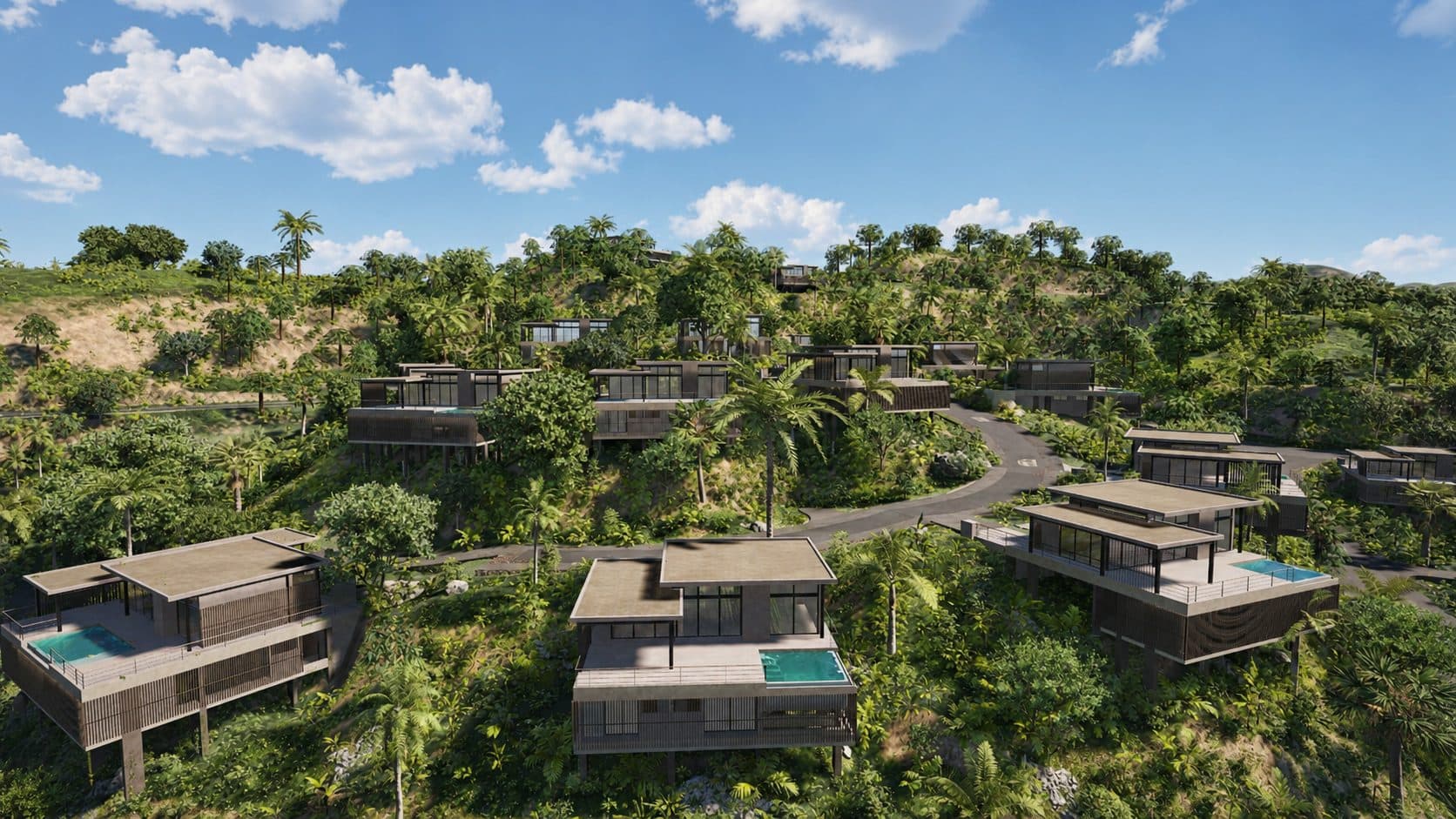
That means villas oriented to the trade winds before any electricity is spent on cooling, reinforced concrete cores where exposure dictates, and footprints that step with the slope instead of flattening it. The mandatory-equipment list and the license conditions behind it live on the sustainability framework page.
Local materials, low footprint
Caribbean construction has a long tradition of using what is on the island. Heavy materials shipped from Europe or North America carry an outsized carbon cost and a fragile supply chain. Sienna's building guidelines favor regional and native materials where structural and environmental performance match — and prohibit a few imports outright.
Coconut fiber roof insulation
A native Caribbean material, used as a layer in the roof assembly. Better thermal performance than standard concrete-only construction, lower embodied energy than imported fiberglass batting.
Locally quarried stone and aggregate
Foundation aggregate and landscape stone are sourced regionally where the spec allows. The further a heavy material travels, the worse its carbon math; the framework prefers nearby suppliers where structural performance matches.
Solar that pays for itself, not a sticker
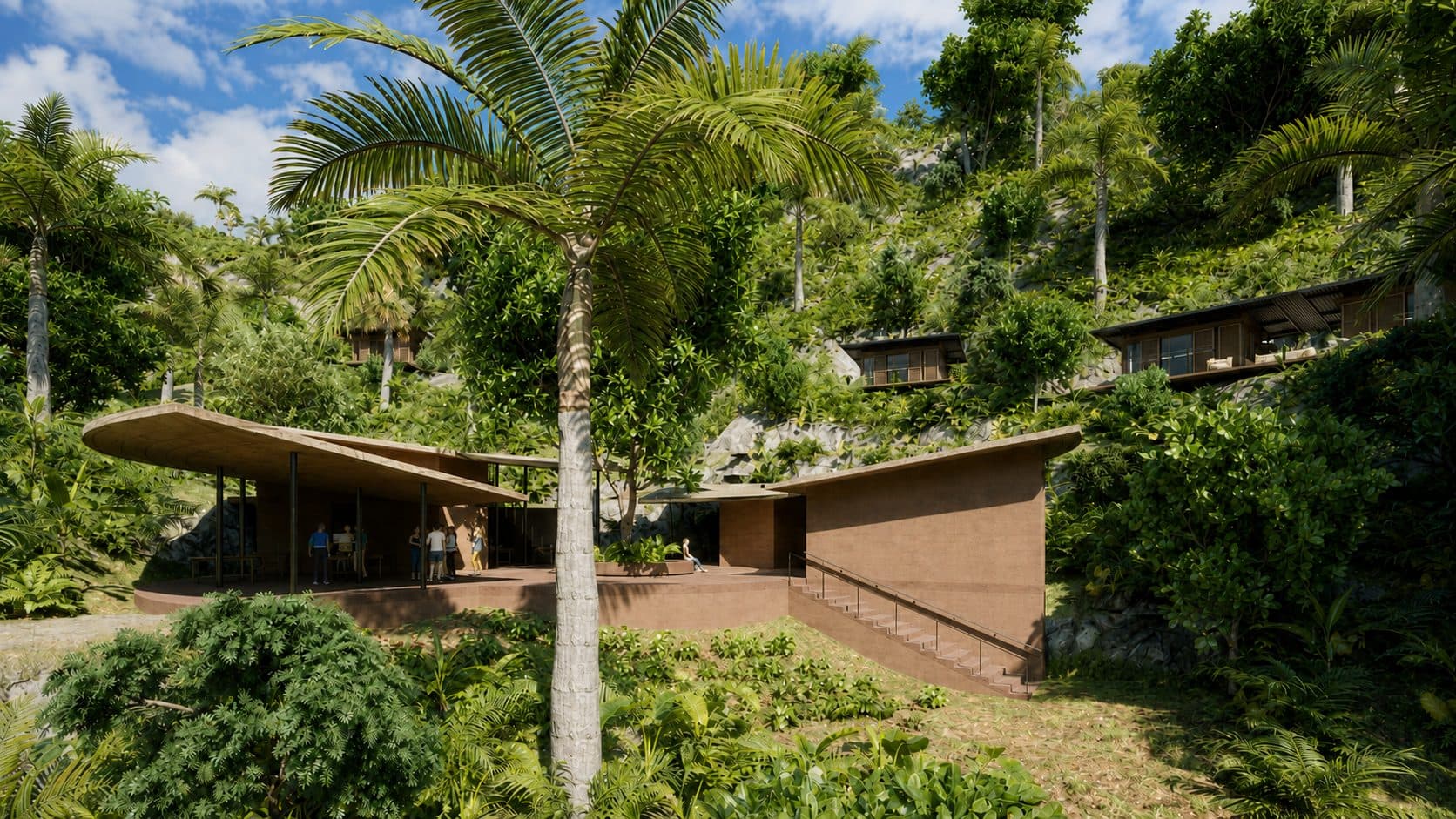
Las Terrenas averages roughly eight hours of usable sunlight per day, year-round. That is the kind of resource grid-tied solar in northern climates does not have. A solar array sized to a Sienna villa typically offsets the bulk of household consumption and pays back inside a window most Caribbean buyers do not expect — and every villa is pre-engineered to accept that array on day one, with no after-the-fact retrofit costs.
Activation is the owner's call. The infrastructure is not.
Sustainable, financially
The honest case for sustainable construction in the Caribbean is not romantic. It is that the operating math, the resale math, and the rental math all point the same way. Sienna's 15-year CONFOTUR tax classification adds a layer on top that most Caribbean markets do not have.
Lower operating costs
Solar-ready infrastructure, passive cooling, and mandatory efficient equipment compound over the life of the villa. Owners report monthly utility costs materially below comparable Caribbean stock.
Stable resale value
As Dominican environmental regulation tightens — and it is tightening — projects without full environmental licensing face liability. Sienna's framework is ahead of the curve.
Premium rental positioning
Eco-conscious travel is the fastest-growing segment of Caribbean tourism. Verifiable environmental credentials position your villa in the part of the market that earns rate premiums and higher year-round occupancy.
The shorter version
Sienna is a 70-acre eco-luxury development on the Dominican north coast where the building rules, the land rules, and the daily rhythm are all designed around the same idea — that sustainable, slow, and beautifully built do not have to be in conflict.
Want the daily-life angle? Read Authentic Living or visit the Sienna Journal.