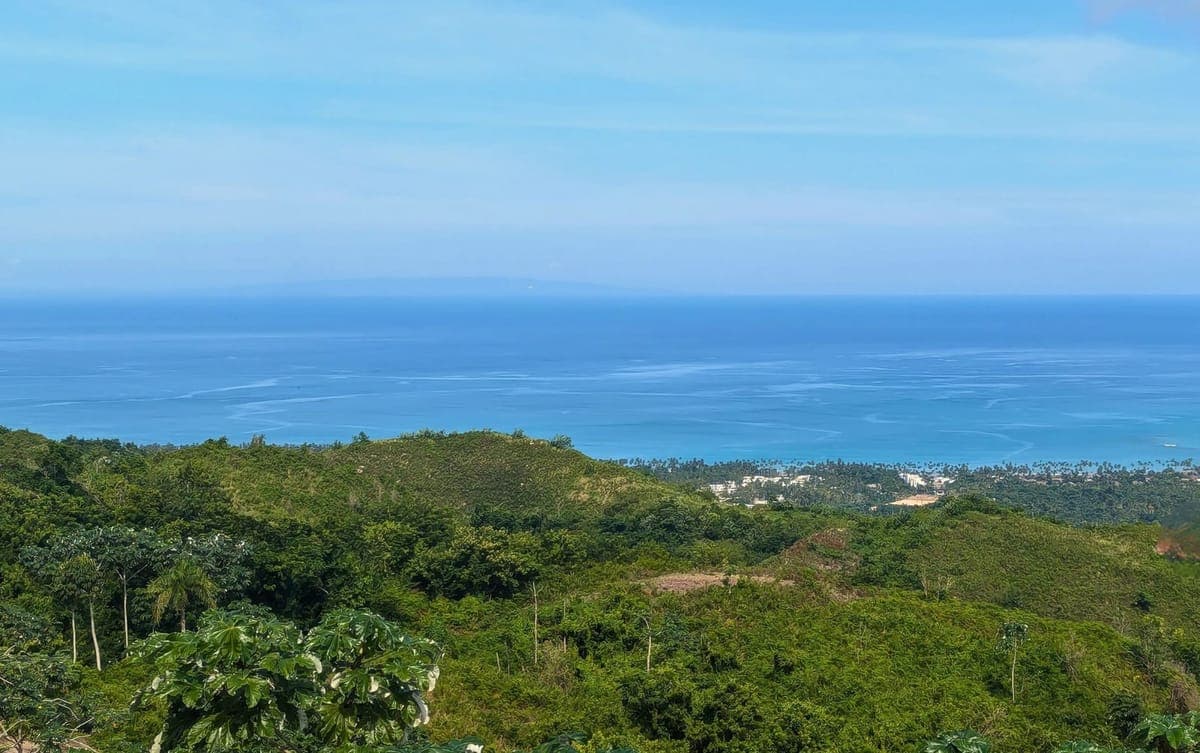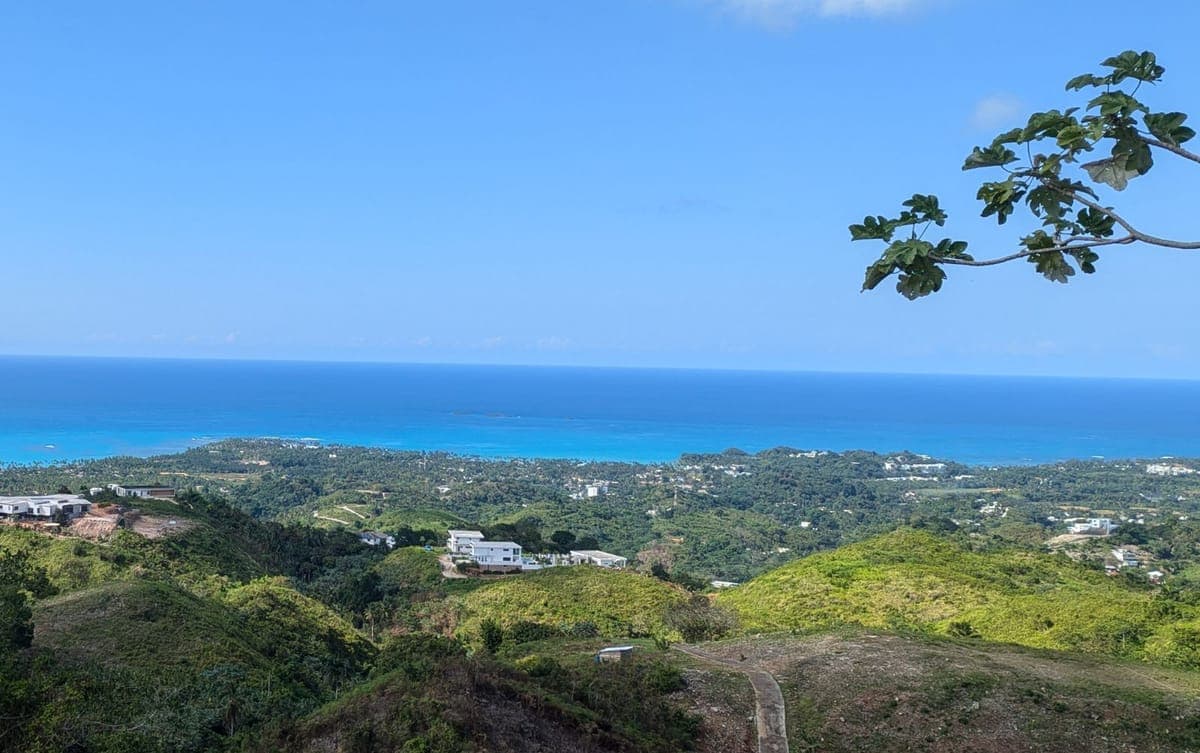
What slow living actually looks like on the Dominican north coast — morning trades, walkable communities, farm-to-table meals, and an afternoon rhythm set by the weather, not a calendar.
The sun comes up over the Atlantic at six-something and the trade winds pick up shortly after. By the time most of the world is sitting at a desk, the day in Las Terrenas is already a few hours in — quieter, slower, set to the local rhythm rather than to a calendar. This is what slow living actually looks like on the Dominican north coast, written as a Tuesday in late May.
Key Takeaways
- Slow living is not "do less" — it is "do the right things at the rhythm of where you are."
- Las Terrenas runs on weather, light, and seasonal markets, not on a 9-to-5; the layout of Sienna is designed to keep that rhythm intact.
- Walkable communities, farm-to-table food, and afternoon weather windows replace the commute, the takeout meal, and the calendar block.
- The Dominican north coast has been doing a version of slow living for generations, long before there was a word for it.
- The best entry point is a few days here — not a brochure.
Morning: the trades come up around 7
Tuesday morning. You are on the terrace by 6:45, before the first cafecito is ready. The Atlantic is calm, the air still cool by Caribbean standards (low 70s F at this hour), and the wind has not yet arrived. By 7:30 the trade winds start, the palms shift, and the temperature rises by maybe four degrees in fifteen minutes — a small but recognizable signal that the day has begun.
Coffee is local. Most of Sienna's coffee comes from Dominican mountain growers — the country is one of the smaller but more interesting specialty coffee producers in the Caribbean. You drink it slowly because there is nothing else competing for the next forty minutes. No commute. No standing meeting. The slow living principle is that the morning is not a transition into the day; it is a part of the day.
By 8 the kids next door — there are kids, this is a community, not a resort — are heading to the school in town. The school bus runs the road below. You see the older Dominican neighbors at the end of the project walking up for their morning stretch on the Casa Club path.
What does "slow" actually mean here?
Slow living, as a movement, started in Italy in the 1980s as a reaction to fast food and faster cities. The phrase is sometimes used in marketing as code for "rural," which misses the point. The actual definition is closer to: doing fewer things, at the cadence the place itself sets.
Las Terrenas, before there was a name for it, was already living that way. The town moves at a deliberate pace not because it is sleepy but because the trade winds, the surf reports, and the seasonal markets are the actual calendar. Restaurants open and close around what is fresh, not around fixed hours. The local fish market runs on the morning boats, not on a schedule.
That is the rhythm Sienna is designed around. The villas are not on a grid; they step with the hillside. The amenities are walkable, not a five-minute drive. The Casa Club restaurant menu changes with what the project's communal farms send up that morning. None of this is forced; the place was already doing it, and Sienna is built to keep doing it.
Mid-morning: walking the project, the farms, breakfast
By 9, you are on the trail network. Sienna is laid out around an internal trail rather than a road plan — villa to Casa Club to farms to wellness center is a walk, not a drive. The walk takes maybe twelve minutes if you stop nowhere, twenty if you say hello to the people you pass, longer if the farm manager waves you over to show you what is coming up this week.
The farms are working farms — not a decorative garden. Tomatoes, herbs, leafy greens, plantains, papaya. What goes to the Casa Club kitchen at lunchtime came out of the ground a few hundred metres away that morning. Slow living, made literal.
Breakfast at the Casa Club is whatever the kitchen has worked out with the farm that day. Fruits in season. Eggs from the small flock the project maintains. Bread from a local Las Terrenas bakery that delivers in the morning. The whole meal is short on imported ingredients because the imported version is worse.
This is the part that surprises new visitors: not the beach, not the views, but how good the food is once the supply chain is fifteen minutes long. A Montreal visitor described it last winter as "feeling like the version of food I forgot existed."
Afternoon: work, surf, or both
The middle of the day, in the tropics, is for working through. The heat peaks between noon and 3. The trades are at their strongest, which makes the villas comfortable with passive ventilation — high ceilings, ocean-facing orientation, the coconut-fiber insulation in the roof assembly that keeps interior temperatures down before air conditioning is even spent.
Remote workers at Sienna typically do their concentrated work in this window. The internet is good — fiber in town, microwave service in the hills, Starlink as backup. The villas have working studies. The Casa Club has co-working space. By 4 or 4:30, when the heat starts to ease, the day shifts again.
This is when Las Terrenas comes alive. The surf at Playa Cosón picks up. The Dominican joggers come back out on the road. The expat community — there is a sizable French and Quebecois community here, plus growing German, Swiss, and American contingents — starts arriving at the beach bars and beach clubs. The afternoon-into-evening window is where the community texture of the town actually shows itself.
Travel + Leisure has tracked Las Terrenas among the Caribbean's emerging "smaller, slower" destinations, and the demographics show it — a mix of long-time French expats from the original 1980s wave, North American second-home buyers, and a younger remote-work cohort that has arrived in the last few years.
Evening: the Cosón sunset routine
By 6, the trades have eased, the heat has broken, and the light has gone gold. Sunset on the Dominican north coast is at roughly 7 PM in May, almost an hour later in December. Most evenings, the routine is: walk down to Playa Cosón or watch from the Casa Club terrace.
Cosón is one of the longer untouched beaches in the Caribbean — several kilometres of palm, no resort development, the kind of beach the regional tourism brochures still photograph for cover shots. The sunset is not the staged version. It is just the actual one.
Dinner runs from 7:30. Sometimes at home — the villas have working kitchens and the produce situation is what it is. Sometimes at the Casa Club. Sometimes down the road at one of the half-dozen Las Terrenas restaurants that have built a quiet international reputation — French-Dominican fusion, Italian, fresh seafood. The town is small enough that you know the owners by the third dinner.
What makes Las Terrenas different
There are many "slow" Caribbean destinations on paper. Las Terrenas is different for three specific reasons:
- The French and Quebecois legacy. Two French entrepreneurs developed the original Las Terrenas in the 1980s, which gave the town an unusual cultural mix from day one — Dominican core, French infrastructure, Quebecois community. The food, the cafes, the rhythm of the centre all reflect that.
- Geographic protection. The Samaná peninsula is partially shielded by the Cordillera Septentrional. The town is far enough from Punta Cana and Santo Domingo to have escaped the package-tourism wave, but close enough (via the recently opened El Catey airport) to remain accessible.
- The size has held. Las Terrenas has grown but slowly. There is no high-rise hotel skyline. The town centre still looks recognizable to the long-time residents who arrived in the 1990s. Slow growth is part of what keeps slow living possible.
Where does slow living come from?
The movement traces directly to a single event: the 1986 opening of a McDonald's near the Spanish Steps in Rome. The Italian writer Carlo Petrini and a small group of activists protested, founding what became Slow Food — a global movement built around the idea that food should be local, seasonal, traditional, and eaten without rushing. Slow Food was the first.
From there the principle spread. Slow Cities (Cittaslow) was founded in 1999 by mayors of small Italian towns who wanted to apply the same logic to urban planning — preserving local character, scale, and pace against the homogenizing pressure of globalization. Slow Travel, Slow Fashion, Slow Money, and eventually Slow Living followed.
Slow Living, as a personal practice, is the most recent and least formalized of these. It does not have a manifesto or a certification body. It is a loose set of principles — deliberateness, place-attachment, seasonality, reduced consumption — that practitioners adapt to their own circumstances.
What is slow living — and what isn't it?
A useful definition: slow living is the deliberate refusal to accept "faster" as automatically better, and the choice to let place, season, and relationship — rather than calendar and notification — set the cadence of daily life.
What it is:
- A practice, not a destination. You do not arrive at slow living; you do it.
- A relationship with place. Slow living without a sense of where you are is mostly aesthetics.
- A choice about how time is spent, not how much there is.
- Compatible with serious work, family, and ambition. The slow-living writer Kate Vaiknoras notes that the busiest people are often the ones who benefit most from the practice.
What it is not:
- Anti-modern. Most committed practitioners use smartphones, work online, travel internationally.
- A vacation aesthetic. A slow weekend is not slow living; the practice has to compound.
- Rural-only. Cittaslow began in towns, not on farms.
- An economic luxury. The practice does not require wealth, though some forms of it (a property abroad, a long break from work) do.
How do you start, whether or not you move?
You do not have to move to the Caribbean to practice slow living. The principles travel.
The most useful starting move is to pick one daily habit and slow it down. Coffee is a common entry point because it happens every day and is easy to change. Meals are another — cook one more day a week, or eat one meal a day without a screen.
The harder move is to commit to one place. Slow living is partly about local-knowledge accumulation — knowing which fishmonger has the best Tuesday catch, which cafe stays open during the slow season, which back road is fastest on a Friday. That knowledge only builds with time in one place.
For some people, the answer eventually is a real move — to a slower town, to a second home in a slower country, to a remote-work setup that allows months in one place at a time. For others, the practice happens entirely where they already are.
The shorter version
Slow living in Las Terrenas is not a marketing concept. It is a description of how the town actually runs — set by the trades, the surf, the morning farms, and a community that has been doing this for generations. Sienna is built into that rhythm rather than alongside it.
The honest way to know if it is for you is to spend a few days here. [Arrange a Discovery Tour]The simplest next step is to come and see it: the Discovery Tour is four nights in Las Terrenas with property visits and the legal and market sessions. The pillar overview of how the project supports this way of living is at /sustainable-living.
Stay in the loop
Have questions about this?
Talk to our sales team directly — we'll answer on WhatsApp or by phone.
Written by
Sienna Terrenas Editorial Team
The Sienna Terrenas editorial team covers buying, owning, and living in Las Terrenas, Dominican Republic — from the purchase process and CONFOTUR tax strategy to villa construction and Caribbean community life, drawing on the team's on-the-ground experience in the area. Meet the Sienna Terrenas team.