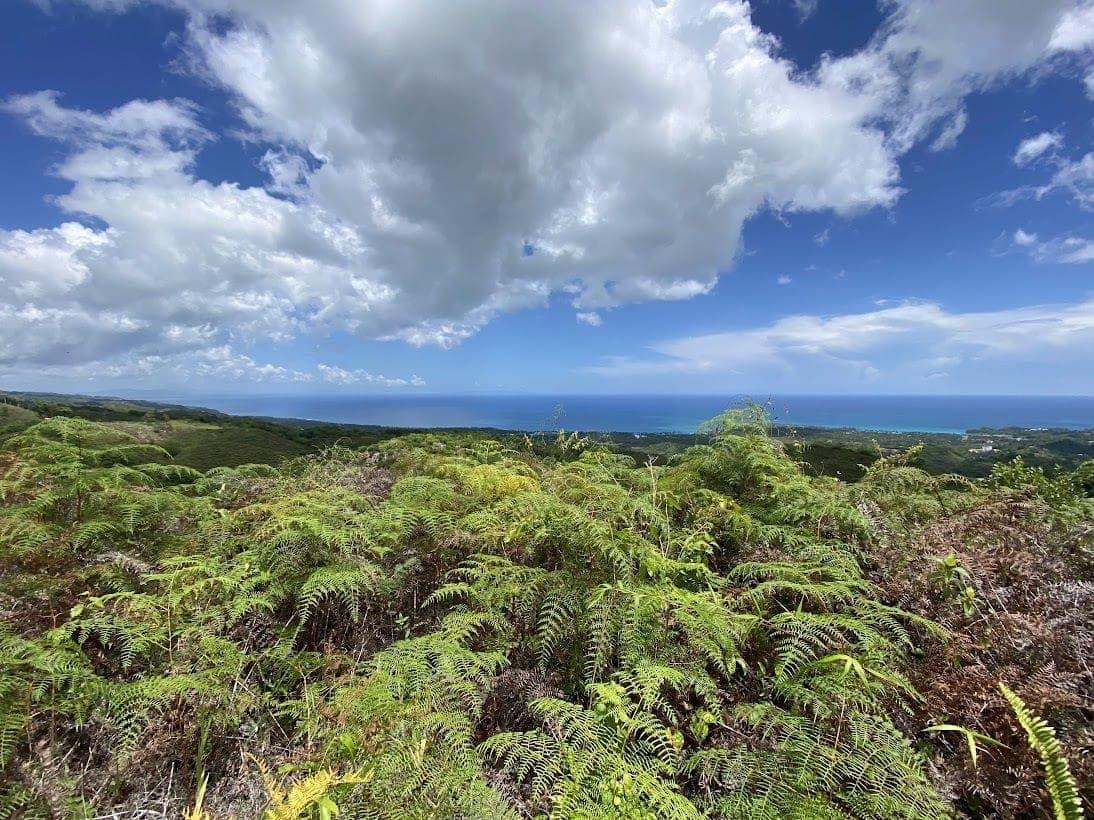
Discover how Sienna Terrenas blends eco-friendly building practices, solar-ready infrastructure, and local material sourcing to deliver sustainable luxury in Samana — and why green properties command premium returns.
Are you searching for a Caribbean investment that doesn't come at the planet's expense? If you're a sustainability-minded buyer exploring eco-friendly real estate in the Dominican Republic, you've probably found that most luxury developments make green promises but deliver concrete-and-glass resort clones. You're not alone in that frustration.
Here's the reality: sustainability in Samana isn't just a marketing buzzword — it's a measurable investment strategy. At Sienna Terrenas, eco-conscious design is baked into every foundation, every solar panel, and every native tree planted across our 70-acre hillside community. In this guide, I'll walk you through exactly how Sienna's sustainable model works, what it means for the Samana Peninsula's extraordinary ecosystem, and why green properties are quietly outperforming conventional Caribbean real estate in 2026.
Why Does the Samana Peninsula Matter Environmentally?
What makes Samana so ecologically significant? The Samaná Peninsula is one of the Caribbean's most biodiverse regions — a UNESCO-recognized biosphere buffer zone home to humpback whale breeding grounds, ancient Los Haitises National Park, and some of the Caribbean's last intact mangrove systems.
A Fragile Ecosystem Worth Protecting
Every January through March, more than 3,000 humpback whales migrate to Samaná Bay to breed — one of the largest congregations on Earth. The peninsula's interior shelters cloud forest species found nowhere else in the region, while its coastline nurtures coral reef systems that support local fishing communities.
Development here carries responsibility. Sienna was designed with that responsibility at its core — not as an afterthought, but as a founding principle.
What Makes Sienna's Construction Approach Genuinely Sustainable?
How do you tell the difference between a developer that talks green and one that actually builds green? Look at the specifics. Sienna's construction framework is built around three measurable pillars: material sourcing, site design, and resource efficiency.
Local Material Sourcing, By Design
Shipping building materials across oceans generates enormous carbon footprints. Sienna's build specifications favour locally sourced construction materials wherever practical — stone, hardwoods, artisan tiles, and structural aggregates are procured from Dominican suppliers within the region wherever possible.
This isn't just environmentally responsible — it's economically smart. Local sourcing cuts logistics costs, supports Dominican craftspeople, and produces buildings that are climatically adapted. The Taino-inspired architectural vocabulary we use isn't decorative nostalgia; it reflects centuries of accumulated knowledge about how to build comfortably in this specific climate.
Design That Works With Nature, Not Against It
Sienna's lots are positioned across the hillside at 150-300 metres elevation, taking advantage of the peninsula's natural trade winds for passive cooling. Orientation is carefully planned so that ocean breezes cross-ventilate interior spaces, dramatically reducing the need for mechanical air conditioning — typically the single largest energy expense for Caribbean properties.
70% of landscaping uses native plant species, reducing irrigation demands and eliminating the chemical inputs needed to keep non-native species alive in tropical conditions. The result is a landscape that gets more beautiful and biodiverse over time, not one that requires constant intervention.
Is Solar-Ready Infrastructure Worth the Investment?
Here's a question worth asking directly: does solar infrastructure actually move the needle on your returns, or is it just feel-good PR? In Las Terrenas in 2026, this question has a clear financial answer.
Solar-Ready From Day One
Every lot and villa at Sienna is delivered with solar-ready infrastructure pre-installed — conduit routing, panel mounting points, battery storage preparation, and grid-tie inverter connections. This means buyers avoid the costly and disruptive retrofitting process that plagues owners of older Caribbean properties.
The economics are compelling. A well-specified solar installation on a Sienna villa materially reduces monthly utility costs, with typical payback periods of 6-8 years. Given that most buyers are looking at 15-20 year ownership horizons, the lifetime savings are substantial — often $25,000-$45,000 over the ownership period.
For rental investors, the calculation is even stronger. Properties with lower operating costs command better net yields, and eco-certifications are increasingly a filter on premium short-term rental platforms. Want to understand the full economics? Our solar-powered luxury analysis breaks down the numbers in detail.
Water Management
Samana's rainfall is generous — the peninsula receives approximately 2,200mm annually — which makes water a manageable resource here. Sienna's own contribution is individual wastewater treatment for every villa and 70% native plant landscaping, which needs far less irrigation than conventional ornamental planting.
How Do Environmental Certifications Affect Property Value?
Do green certifications actually translate into higher sale prices and better rental income? The global data increasingly says yes — and Las Terrenas is following suit.
The Green Premium in Caribbean Real Estate
Green certification is increasingly a purchase filter rather than a bonus, particularly among European buyers, who make up a large share of the Las Terrenas market. A certified building carries documentation a buyer can actually check — energy performance, materials, water systems — and that paperwork is what holds value at resale.
Sienna is pursuing LEED and EDGE certification alignment across its construction standards. Even without formal third-party certification on individual lots, adhering to these frameworks signals quality to informed buyers and justifies premium pricing at resale.
Globally, green-certified homes sell 19% faster than non-certified equivalents in comparable markets. In a community like Sienna — where resale liquidity is tied to international buyer interest — that speed matters.
What Is Sienna's Approach to Community and Biodiversity?
Sustainability isn't just about the buildings — it's about how a community relates to its environment long-term. What does that actually look like at Sienna?
Protected Natural Environment Across 70 Acres
Of Sienna's 70-acre development footprint, the majority is preserved as natural environment, community green space, and organic gardens. Lot coverage ratios are intentionally conservative, ensuring that the hillside retains its ecological function — water infiltration, canopy cover, and habitat connectivity — even as the community grows.
Native tree planting is mandatory across all lots, with a minimum canopy coverage requirement that increases over time. Several endemic species — including the rare Hispaniolan broadbill and multiple orchid varieties — have been documented on-site, and Sienna's land management plan actively maintains habitat corridors for their protection.
Organic Community Gardens and Farm-to-Table Living
Sienna's shared organic gardens are more than an amenity — they're a living demonstration of sustainable food systems. Residents and guests can participate in seasonal planting and harvest, reducing food miles for on-site dining and connecting the community to the rhythms of Dominican agricultural tradition.
For a deeper look at how smart technology integrates with these sustainable systems, the smart home technology guide covers how Sienna properties automate energy and water management without sacrificing comfort.
How Does Sustainability Strengthen Your Investment Returns?
Let's bring this back to the bottom line — because sustainability and strong returns aren't a trade-off at Sienna. They're designed to reinforce each other.
Lower Operating Costs, Higher Net Yields
Solar-ready infrastructure, passive cooling design, and per-villa wastewater treatment combine to lower operating costs compared to conventional Caribbean villas. For rental investors, lower operating costs translate directly into higher net yields on top of Sienna's already-competitive 6-9% gross rental yields.
CONFOTUR Tax Benefits Amplify Green Returns
Sienna qualifies for the DR's CONFOTUR tourism incentive law, delivering $50,000+ in tax savings over 15 years — including 0% property tax and 0% transfer tax. When you stack CONFOTUR savings on top of reduced operating costs and green premium resale values, the total return picture is exceptional. Our CONFOTUR explainer walks through the exact numbers.
The Eco-Luxury Market Is Expanding Fast
Wellness-oriented real estate has been one of the faster-growing residential segments internationally, and eco-luxury sits inside it. Buying into Las Terrenas at pre-construction pricing positions you for that segment to keep expanding — though that is a direction of travel, not a guaranteed return.
For a broader view of where this market is heading, the eco-luxury trends analysis for 2026 offers a data-driven look at where high-net-worth buyers are focusing their attention.
Thinking about how all of this fits your specific investment goals? To see how these principles are built into Sienna, from solar and water to the food forest, visit Sustainable Living at Sienna.
Frequently Asked Questions
What sustainable certifications does Sienna Terrenas target?
Sienna's construction standards are aligned with LEED and EDGE certification frameworks, with on-site practices designed to meet or exceed these benchmarks. While individual lots may not carry third-party certification, the development's overall standards — local material sourcing, solar-ready infrastructure, native landscaping, and water recycling — reflect certified green building principles. Buyers seeking formal certification for individual villas can pursue this through the Dominican Republic's certification process with Sienna's legal and construction team.
How does solar-ready infrastructure work in practice?
Solar-ready means that all the structural and electrical groundwork for a photovoltaic system is pre-installed during construction — including conduit routing, reinforced roof mounting points, battery storage enclosures, and inverter connection points. Buyers can activate a full solar system at any point after handover without structural disruption. Sienna's construction team can also coordinate solar system specification and installation as part of the build process.
Does the elevation affect hurricane resilience?
Yes — significantly. Sienna's hillside position at 150-300 metres elevation places properties above coastal storm surge zones, which are the primary cause of hurricane damage in the Caribbean. The hurricane risk analysis for Las Terrenas covers this in detail, but the short answer is that elevated, inland properties in Samana carry materially lower risk profiles than beachfront or low-lying alternatives.
Does eco-friendly construction cost more upfront?
Some elements of sustainable construction — solar pre-wiring, individual wastewater treatment, quality native landscaping — do add to initial build costs. However, Sienna's scale and local material sourcing offset much of this premium. The relevant comparison isn't upfront cost in isolation, but total cost of ownership over a 10-15 year period — where sustainable features consistently outperform conventional construction through lower operating costs and stronger resale values.
Are there restrictions on how I can develop my lot?
Sienna has architectural and environmental guidelines that govern lot development — including minimum canopy coverage, native plant requirements, and building coverage ratios. These guidelines exist to protect the integrity of the community and the value of every property within it. Far from being a burden, most buyers find these standards reassure them that neighbouring properties will maintain quality and the overall environment will improve over time.
Key Numbers: The Sienna Sustainability Case
Here's a quick-reference summary of what the sustainable investment case looks like at Sienna:
- 🌱 Locally sourced building materials
- ☀️ Lower utility costs with solar activation
- 💧 Individual wastewater treatment for every villa
- 🌿 70% native plant landscaping across common areas
- 🏡 70 acres of development with majority preserved as natural environment
- 💰 $50,000+ in CONFOTUR tax savings over 15 years
- 📈 6-9% gross rental yields, boosted by lower operating costs
- 🐋 3,000+ humpback whales in Samaná Bay annually — the ecosystem your investment helps protect
Sienna proves that the most sustainable investment you can make in the Caribbean is also one of the smartest financial decisions available in 2026. Ready to see how it works for your specific situation? Explore available lots and villas or contact our team to start a no-pressure conversation about your eco-luxury investment in Samana.
Stay in the loop
Have questions about this?
Talk to our sales team directly — we'll answer on WhatsApp or by phone.
Written by
Sienna Terrenas Editorial Team
The Sienna Terrenas editorial team covers buying, owning, and living in Las Terrenas, Dominican Republic — from the purchase process and CONFOTUR tax strategy to villa construction and Caribbean community life, drawing on the team's on-the-ground experience in the area. Meet the Sienna Terrenas team.


