A plain-language look at what Sienna's planned Zone 2 centralized system serves for shared amenities, how it differs from each villa's own treatment, and what falls under HOA scope.
A quick clarification before anything else: at Sienna, each villa treats its own wastewater on its own lot, and the planned centralized system in Zone 2 is not a village-wide sewer. It is scoped to the shared common areas — the amenity buildings, landscaped zones, and communal facilities — not to your private home. Your villa stays independent; the common areas get their own dedicated infrastructure under HOA management.
That distinction matters when you are comparing developments, because it changes what your HOA fee actually covers and what you are responsible for on your own lot. Let me walk you through it.
The Short Version
- Each Sienna villa handles its own wastewater on its own lot — individual, not connected to a village sewer.
- The planned centralized system serves the shared common areas: amenity buildings, communal landscaping, and gathering spaces.
- Common-area infrastructure sits under HOA scope, funded by the monthly HOA fee.
- Zone 1 (30 lots, 28 with ocean views) is the only zone currently for sale; later zones fill in the master plan over time.
- Knowing the split between villa-level and HOA-level systems tells you exactly what you own, maintain, and pay for.
What Does "Zone 2 Common-Area Infrastructure" Actually Mean?
It means the shared services and structures that serve Sienna's communal spaces — not your private villa. Think of the amenity buildings, the landscaped commons, and the utilities feeding those areas rather than a household sewer line running to your bathroom.
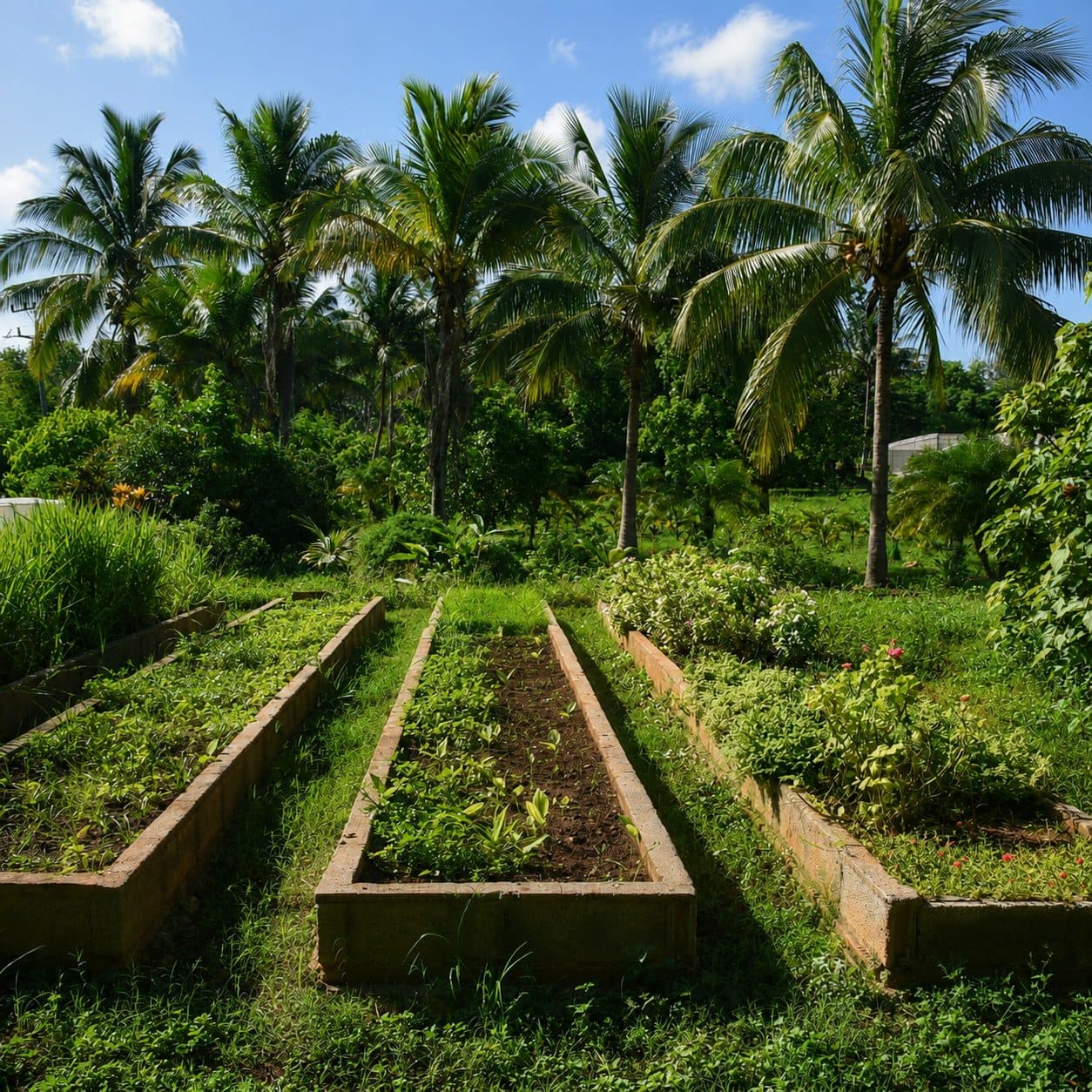
Sienna's 70-acre master plan is organised into zones. Within each zone, there is a clear line between what belongs to an individual lot owner and what belongs to the community. Your villa is a self-contained property. The common areas — walkways, gardens, gathering points, amenity structures — are collectively owned and collectively maintained.
Why the community splits it this way
Keeping villa systems independent while pooling common-area systems is deliberate. It means a problem at one villa never cascades into a neighbour's home, and shared facilities get professional, centralized upkeep instead of being nobody's responsibility. If you want the full picture of how these shared facilities fit together, the complete guide to Sienna's amenities maps out the community layer in detail.
Key takeaway: "Common-area infrastructure" is the shared layer — it does not reach inside your lot.
How Is This Different From Each Villa's Own Treatment?
Every villa treats its own wastewater on its own lot, independently of the common-area system. This is one of the defining engineering choices at Sienna, and it is worth understanding before you buy.
Each home has its own on-lot wastewater treatment, sized to that villa. There is no shared pipe carrying your sewage to a central plant, and no shared plant whose failure affects your home. The approach — how each villa handles its own sewage sustainably — is covered in depth in our piece on individual wastewater treatment per villa.
Villa-level vs common-area systems at a glance
| System | Who owns it | Who maintains it | What it serves |
|---|---|---|---|
| Wastewater treatment | Individual lot owner | Owner (with guidance) | That single villa |
| Water cistern / storage | Individual lot owner | Owner | That single villa |
| Solar / power setup | Individual lot owner | Owner | That single villa |
| Common-area centralized system | The community (HOA) | HOA | Shared amenity zones |
| Communal landscaping | The community (HOA) | HOA | 70% native planting, commons |
| Access roads & shared paths | The community (HOA) | HOA | The whole zone |
Key takeaway: Villa systems are yours; common-area systems are the community's. The centralized system lives on the community side of that line.
What Falls Under HOA Scope — and What Doesn't?
The HOA covers the shared common-area infrastructure and the services that keep communal spaces running; your own lot's systems stay your responsibility. Getting this boundary clear upfront prevents surprises later.
Your monthly HOA fee funds the common layer — the centralized system for shared areas, communal landscaping, shared access, and the professional management that keeps it all working. Sienna's published HOA fees run from $280 per month for a 1-bedroom up to $560 for a 5-bedroom, scaled to villa size. You can see how that structure works on the HOA fees and coverage page.
On the HOA side
- The planned centralized system serving common areas
- Communal landscaping and native planting in shared zones
- Shared roads, paths, and access
- Professional community management
On your side
- Your villa's own wastewater treatment
- Your villa's water storage and filtration
- Your villa's power and solar setup
- Interior maintenance and furnishings
Well-run shared infrastructure is not just a convenience — it protects value. The World Bank's research on infrastructure and property links reliable local services to stronger long-term asset performance, which is one reason communal systems are worth funding properly rather than cutting corners.
Key takeaway: The HOA owns the shared layer; you own your lot's systems. The fee buys you managed common infrastructure so you are not personally responsible for it.
Where Do the Zones Fit in the Las Terrenas Development Phases?
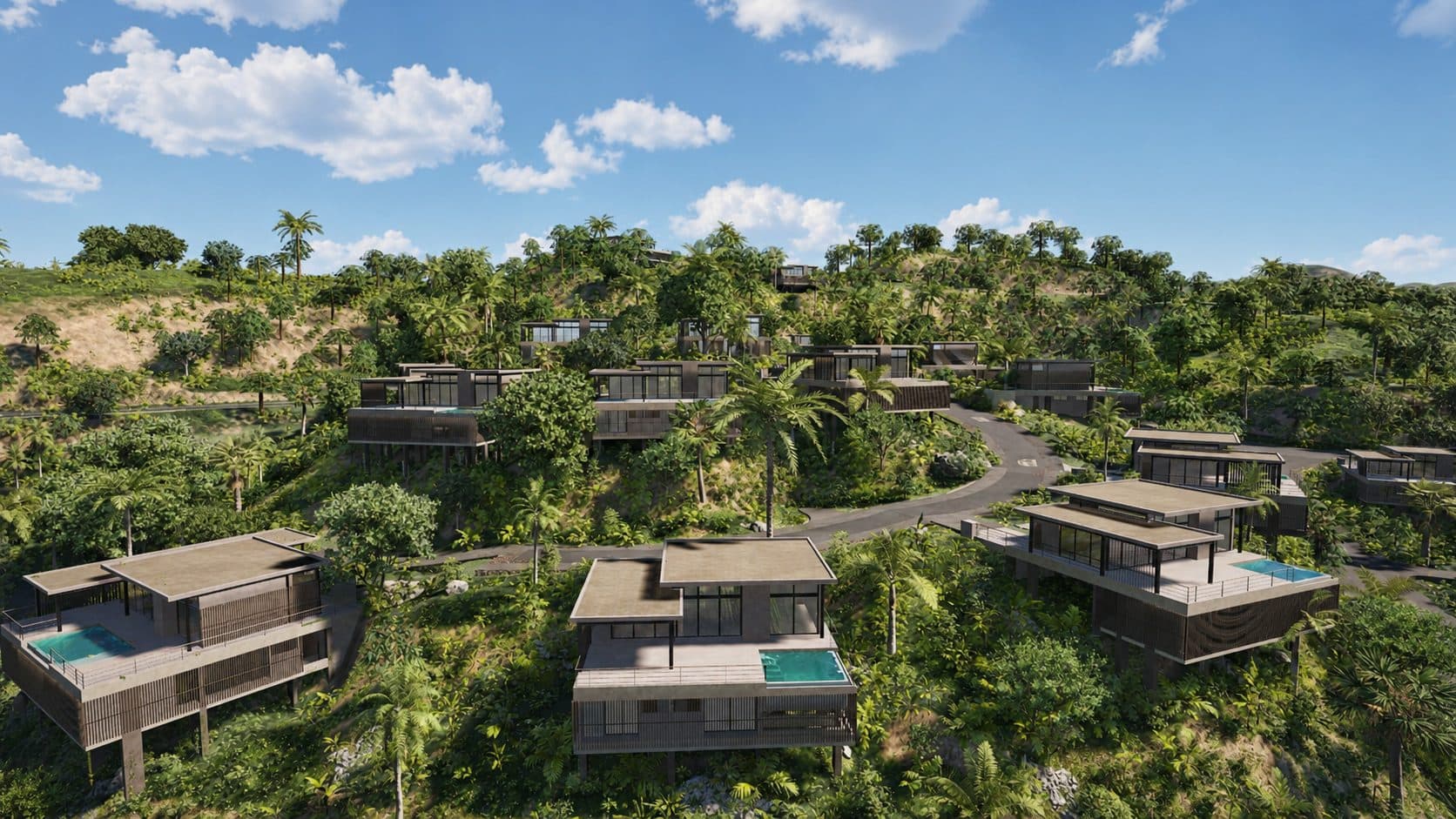
Sienna's zones roll out across a master plan spanning 70 acres and a total of 93 lots. Zone 1 — 30 lots, 28 with ocean views — is the zone currently for sale, and it is where buyers are focused today.
The zoned structure is common in planned Las Terrenas developments: infrastructure and common areas are built out in a sequence rather than all at once, which keeps quality controlled and the community coherent as it grows. The El Jamito hillside setting — at 150 to 300 metres of elevation — shapes how each zone is laid out, and our article on why Sienna chose the El Jamito hills explains the microclimate logic behind it.
The value of a planned community is not any single villa — it is the shared framework around them: the roads, the commons, the managed systems that no individual owner has to shoulder alone.
Las Terrenas itself continues to draw international buyers — the town is home to 6,000+ residents from 20+ countries, and its appeal as a destination has been noted by outlets like Travel + Leisure in their Caribbean coverage. That established international community is part of what a well-planned development builds on.
Key takeaway: Zone 1 is the live zone; later zones extend the same master-plan logic of shared common-area infrastructure over time.
Why This Matters When You're Comparing Developments
Because "what's included" varies wildly between Caribbean projects, and the infrastructure split tells you what you truly own versus what you share. A development that promises centralized everything may leave you exposed to shared-system failures; one that leaves everything to the owner may leave amenities unmanaged.
Sienna's split — independent villa systems plus a managed common layer — gives you both control over your own home and the benefit of professional shared infrastructure. If you are weighing this against other options, running your own numbers helps; the investment assessment is a no-pressure way to see how the model fits your situation.
Key takeaway: The clarity of the villa-vs-common split is itself a feature worth comparing.
Frequently Asked Questions
Does the centralized system connect to my villa's plumbing?
No. Your villa treats its own wastewater on its own lot. The planned centralized system serves the shared common areas — amenity zones and communal facilities — not private homes.
Is Zone 2 currently for sale?
Zone 1, with 30 lots (28 with ocean views), is the zone currently offered for sale. Later zones extend the master plan across the 70-acre, 93-lot development over time.
What does my HOA fee cover regarding infrastructure?
The HOA funds the shared common-area infrastructure, communal landscaping, shared access, and professional management. Fees run $280–$560 per month depending on villa size. Your own lot's systems stay your responsibility.
Why doesn't Sienna use one big central sewer for every villa?
Independent per-villa treatment means a problem at one home never affects a neighbour, and each system is sized to its own villa. It is a more resilient approach for hillside lots than a single shared plant.
The Bottom Line
At Sienna, your villa is self-contained and the planned centralized system serves the shared common areas under HOA management — two clearly separated layers. That split tells you exactly what you own, what you maintain, and what your HOA fee buys. To see how the model works for your goals, book a no-pressure consultation with our Las Terrenas team.
Stay in the loop
Have questions about this?
Talk to our sales team directly — we'll answer on WhatsApp or by phone.
Written by
Sienna Terrenas Editorial Team
The Sienna Terrenas editorial team covers buying, owning, and living in Las Terrenas, Dominican Republic — from the purchase process and CONFOTUR tax strategy to villa construction and Caribbean community life, drawing on the team's on-the-ground experience in the area. Meet the Sienna Terrenas team.