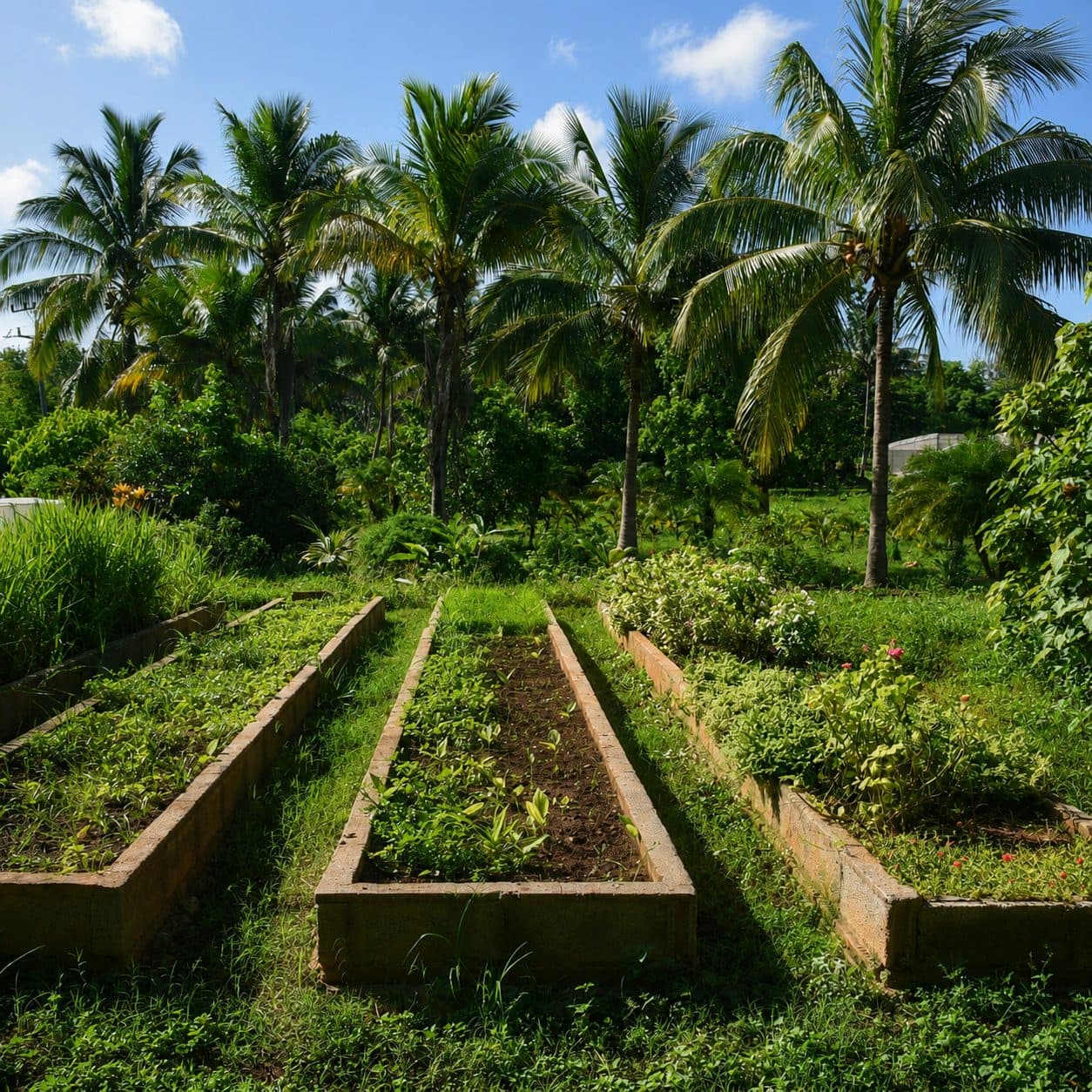
How Sienna's on-site organic farm works for owners: shared harvests, seasonal cooking classes, and a sustainable community built around growing food in the Samaná hills.
Sienna's collaborative farm is an owner-shared organic growing operation on the 70-acre El Jamito property, where residents can join seasonal harvests, take cooking classes, and eat what the community grows — not a decorative garden, but a working food source managed by on-site agronomists. Participation is opt-in and folded into the community rather than billed separately. For buyers drawn to a sustainable community and hands-on eco village living, it's a defining part of daily life here.
What You Need to Know
- The farm is a working organic operation, professionally managed by agronomists — owners participate as much or as little as they like.
- Sienna spans 70 acres (29 hectares) with 70% native plant landscaping, so the farm sits inside a genuinely biodiverse setting.
- Owners share in seasonal harvests, cooking classes, and farm-to-table events — no farming experience required.
- This is one amenity among many; see the full picture in Sienna's complete community amenities guide.
- The lifestyle appeals to health-conscious buyers who want authentic connection over resort isolation.
What Is Sienna's Collaborative Farm?
It's a shared organic farm and food forest on the El Jamito hillside, run by Sienna's own agronomy team, that supplies produce to residents and hosts community growing activities.
Think of it less like a private vegetable patch and more like a small, well-run market garden that the whole community has access to. The team plants for the Samaná climate — tropical fruit, leafy greens, herbs, root crops — and manages soil, irrigation, and harvest cycles year-round. With 240+ days of sunshine annually and consistent rainfall in these hills, the growing calendar rarely stops.
The point is connection. Rather than trucking in supermarket produce, owners can walk down to the farm, help pull a harvest, and cook it that evening. It's the difference between owning in a resort and living in a place with roots.
How Do Residents Actually Participate?
Participation is flexible and opt-in — you decide your level of involvement, from occasional harvest days to regular hands-on gardening.
Here's how that works in practice. Some owners want dirt under their fingernails; others just want a basket of vegetables at their door. Sienna's model accommodates both.
Three Common Levels of Involvement
- The harvest sharer — You collect a portion of the seasonal yield without doing the labour. Ideal for part-time residents and snowbirds who arrive for a few months.
- The weekend grower — You join scheduled planting and harvest days, learn what thrives here, and take home what you help pick.
- The plot steward — More engaged owners work alongside the agronomists on specific beds or the food forest, shaping what gets grown.
Picture a Montreal couple who spend December through March at Sienna. They're not going to run a farm — but joining a Saturday harvest, then eating that produce at a community dinner, is exactly the authentic rhythm they came for. That flexibility is the whole design.
Our farm isn't an amenity you pay to look at from a distance. It's soil you can put your hands in, food you can carry to your kitchen, and a table you'll share with neighbours who came here for the same reasons you did.
What Does "Organic Farming Practices" Mean Here?
It means growing food without synthetic pesticides or fertilisers, using methods matched to a tropical hillside — composting, companion planting, native species, and a food-forest approach.
Sienna doesn't chase a marketing label; it applies practical tropical organic methods. Roughly 70% of the landscaping across the development uses native plants, which reduces water demand and supports pollinators. The farm extends that philosophy into edible production.
The Food-Forest Model
Instead of tidy monoculture rows, part of the growing area is designed as a layered food forest — canopy fruit trees over shrubs over ground crops — which mimics how a tropical ecosystem naturally stacks itself. This approach retains soil, resists erosion on the slope, and produces across seasons. If you want the deeper method, our piece on designing an edible food forest walks through the layers, and the principles of tropical organic farming covers soil and pest management in this climate.
According to the UN Food and Agriculture Organization's work on agroecology, diversified tropical systems that combine trees and crops improve resilience against pests and climate shocks compared with single-crop planting — the logic behind Sienna's layered design.
The takeaway: this is food you can trace from soil to plate, grown by people you can meet.
How Does the Farm Fit Sienna's Eco Village Vision?
The farm is the practical heart of Sienna's sustainability mission — it turns an abstract "eco village" idea into something you eat every week.
Sustainability at Sienna isn't only solar panels and passive cooling. It's a food system. The development pairs the farm with other eco features — solar-ready infrastructure, native landscaping, and architecture designed for the hillside — so daily living has a lighter footprint. Samaná's push toward sustainable development, covered in our look at eco-friendly investing in Samaná, gives this real regional context.
There's also a cultural layer. Sienna's design draws on Taino heritage, and the region's indigenous agricultural traditions — the conuco system of mixed, intercropped plots — inform how tropical growers work with the land today. Our article on Taino conuco agriculture traces that lineage.
Global demand for this kind of living is real. Travel + Leisure's coverage of experiential travel notes that food-and-farm experiences now rank among the fastest-growing reasons affluent travellers choose a destination, a shift Sienna builds into permanent residency rather than a one-off visit.
Curious whether this lifestyle matches your goals? The simplest next step is to come and see it: the Discovery Tour is four nights in Las Terrenas with property visits and the legal and market sessions.
What Do Residents Get Out of It Day to Day?
Owners get fresh organic produce, a built-in social calendar around food, and a genuine sense of belonging — the things that turn a property into a home.
The Social Side
Farm-to-table dinners, seasonal harvest gatherings, and cooking classes give the community a reason to come together beyond a pool deck. This overlaps directly with Sienna's broader social programming, which we detail in the social side of Sienna. Food is the connector — you meet your German, Québécois, and Dominican-American neighbours over a shared meal, not a HOA notice.
The Wellness Angle
For the health-conscious buyer, eating what grows a five-minute walk away is its own return. Farm-to-table dining, organic gardens, and outdoor activity are core to how residents live here. Among Sienna's 6,000+ international residents from 20+ countries, wellness is a shared value, not a niche.
The bottom line: the farm delivers something a spreadsheet can't — but it also raises the everyday quality of an already strong investment.
Frequently Asked Questions
Do I have to work on the farm to enjoy it?
No. Participation is entirely opt-in. Harvest sharing, cooking classes, and community dinners are open to all owners regardless of how much — or how little — hands-on gardening you want to do.
Is the produce actually organic?
Sienna uses organic farming practices — no synthetic pesticides or fertilisers, plus composting, companion planting, and native species. The focus is verifiable tropical organic methods rather than a specific certification label.
Who manages the farm when I'm not there?
Sienna's on-site agronomists manage planting, irrigation, and harvest cycles year-round. Part-time owners and snowbirds return to a farm that's been tended in their absence — the same turnkey philosophy behind the property management program.
Does the farm add to my HOA costs?
The farm is part of the community amenity structure. Sienna's published HOA fees run from $280 to $560 monthly depending on villa size, covering the shared services that keep the development and its amenities running.
Can the farm support rental guests too?
Yes. Owners who rent through Sienna can offer guests the farm-to-table experience as a differentiator — a genuine draw in a market where authentic, sustainable stays command attention.
Where This Leaves You
Sienna's collaborative farm turns "sustainable community" from a brochure phrase into a Saturday harvest, a cooking class, and a dinner with neighbours — professionally run, entirely opt-in, and woven into daily life on the 70-acre El Jamito property. For buyers weighing authentic living against generic resort ownership, it's a concrete point of difference.
If this is the kind of life you're picturing, the next move is simple: book a [no-pressure consultation with Sienna's Las Terrenas team]The simplest next step is to come and see it: the Discovery Tour is four nights in Las Terrenas with property visits and the legal and market sessions.
A home you can eat from, in a community that chose the same values you did — that's what growing here actually means.
Stay in the loop
Have questions about this?
Talk to our sales team directly — we'll answer on WhatsApp or by phone.
Written by
Sienna Terrenas Editorial Team
The Sienna Terrenas editorial team covers buying, owning, and living in Las Terrenas, Dominican Republic — from the purchase process and CONFOTUR tax strategy to villa construction and Caribbean community life, drawing on the team's on-the-ground experience in the area. Meet the Sienna Terrenas team.


