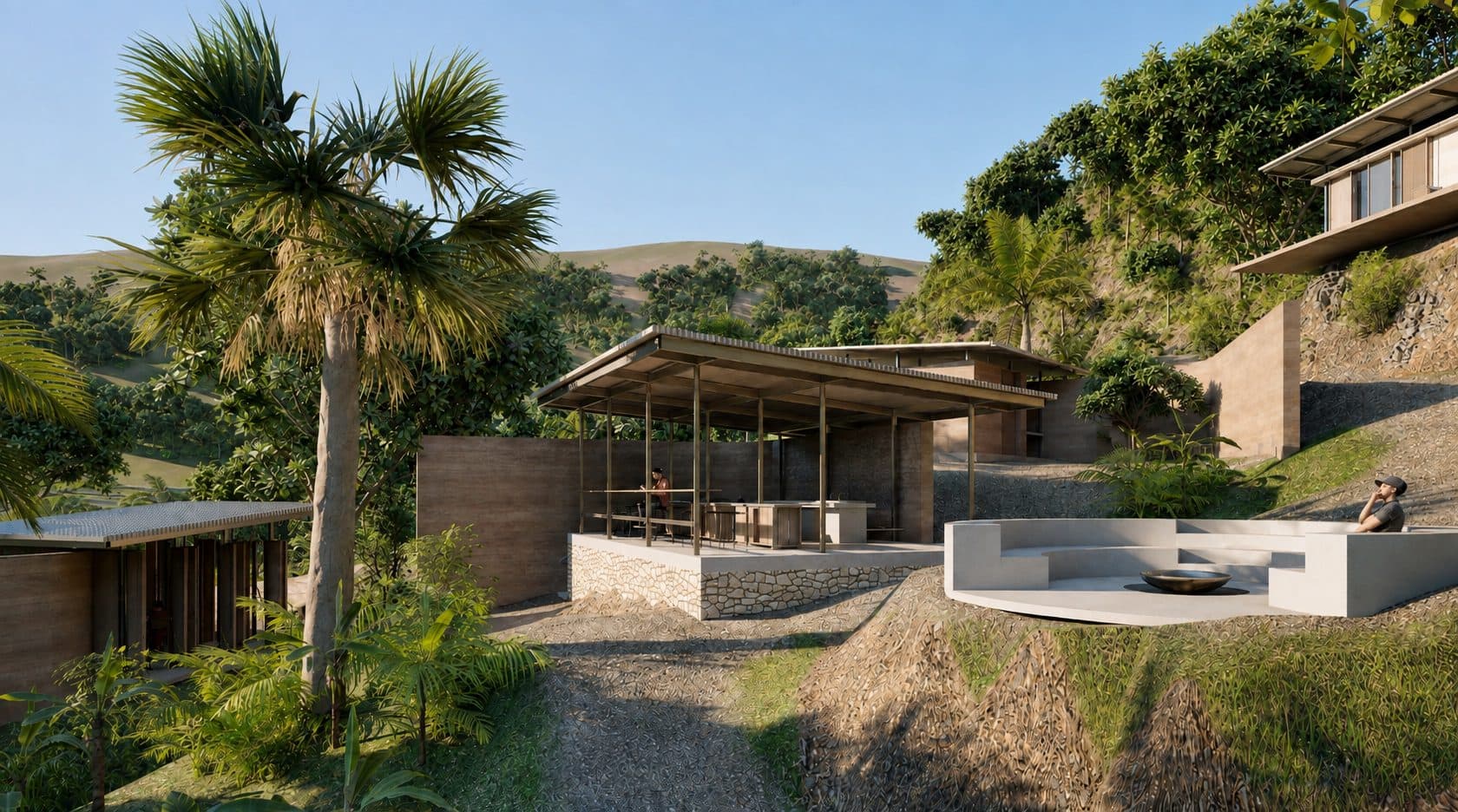
A seasonal look at Sienna's collaborative farm — the crops in the ground now, what's harvesting this time of year, and the simple ways owners take part in organic farming in Las Terrenas.
Walk the lower terraces of the farm on an October morning, before the heat settles, and you catch the farm at its busiest hour. The dry-season planting beds are freshly turned. Papaya trees are heavy with fruit that was green in July. Someone is clipping culantro and chives into a basket for the week's kitchen, and the air smells of wet soil and crushed lemongrass. This is the state of Sienna's collaborative farm this season — a working organic plot on a Samaná hillside, not a decorative herb box — and this is how owners get their hands into it.
Key Takeaways
- Sienna's collaborative farm is a working organic amenity: owners share in the planting, harvest, and food it produces.
- October sits at the handover between the rainy and dry seasons, so the farm is both harvesting summer fruit and starting cool-season vegetable beds.
- Participation is flexible — from a few hours at a harvest day to an ongoing bed, with the agronomy team handling the daily work.
- Organic farming in Las Terrenas follows the island's two-season rhythm, not a four-season calendar, so the "what's planted" list shifts twice a year.
- The farm is one thread of a wider Sienna community woven around food, wellness, and shared land.
What Is Sienna's Collaborative Farm?
It's an on-site organic farm that residents share — a real one, with compost, irrigation, and a rotating crop plan, managed day-to-day by Sienna's agronomy team so owners can be as hands-on or hands-off as they like.
The idea is simple. Rather than buy packaged produce flown into Las Terrenas, you grow a meaningful share of it a short walk from your villa, on soil that's been inventoried and cared for by ecologists. The farm sits inside the same 70-acre property as the villas and is run on organic principles — no synthetic pesticides, compost built on site, native species kept around the edges.
If you're trying to picture how this amenity fits alongside the pool, the trails, and the community spaces, our complete guide to Sienna's amenities lays out the full picture. The farm is one piece of that, and arguably the one that pulls neighbours together most reliably.
A farm shared by neighbours does two jobs at once: it feeds people and it introduces them. The harvest basket is a better icebreaker than any welcome event.
What Season Is It on a Samaná Hillside Right Now?
It's the handover month. Late October is when Samaná shifts from its wetter stretch into the drier, breezier run toward spring — which makes it one of the more interesting times to see the farm working.
The two-season rhythm, not four
Here's the thing that trips up newcomers from Montreal or Munich: there is no spring-summer-fall-winter planting calendar in Las Terrenas. The peninsula runs on a wet season and a dry season, and the farm's crop plan tracks those. Right now you're seeing the tail of the rainy-season growth and the first beds for cooler, drier months.
That matters for anyone imagining their own kitchen garden later. If you want the deeper version of this calendar, our guide to tropical fruit trees of Samaná month by month maps what ripens when across the whole year.
What's Harvesting This Season?
Right now the farm leans on fruit that set during the rains and herbs that thrive in the humidity. The dry-season vegetables are still coming.
Fruit and herbs coming off the farm now
- Papaya — the rainy months swell the fruit, and October trees carry a steady supply.
- Plantain and banana — year-round staples in Samaná, with hands cut as they fill out.
- Lemongrass, culantro, chives, and basil — herbs that love humidity and reward frequent cutting.
- Passionfruit (chinola) — the vines that flowered earlier are dropping fruit now.
- Leafy greens — fast-cycle crops that get replanted continuously rather than seasonally.
The cacao and coconut that define this peninsula's agriculture sit on a longer clock — if you're curious how the region's signature crops shape local food, our piece on the crops of the Samaná peninsula covers that story. The collaborative farm borrows the same organic logic on a smaller, shareable scale.
What's Being Planted for the Dry Season?
The dry season is prime time for vegetables that would rot or bolt in heavy rain, so the freshly turned beds you see now are going in for a December-through-spring harvest.
Going into the ground this month
- Tomatoes, peppers, and eggplant — nightshades that prefer the drier, breezier stretch.
- Lettuces and salad greens — cooler, drier air means less fungal pressure and crisper heads.
- Herbs for the kitchen rotation — cilantro and dill that struggle in peak humidity.
- Root crops and legumes — building the soil as much as the pantry.
The agronomy team handles seeding, spacing, and irrigation timing. Owners who want to learn the "why" behind the choices can — and that's where the collaborative part earns its name. If starting your own patch appeals, the practical starter is our guide to an organic kitchen garden in the DR, which covers soil, timing, and first crops.
How Do Owners Actually Join In?
Participation scales to your schedule and your appetite for dirt under your fingernails — from a casual harvest morning to an ongoing bed you help plan.
The ways in
- Harvest days — show up, pick, take food home, meet neighbours. The lowest-commitment entry point and the most social.
- Seasonal planting sessions — get involved at the start of a cycle, when beds are laid out and decisions get made.
- A share of the harvest — residents draw on what the farm produces as part of the amenity, rather than everyone needing their own plot.
- Cooking and seasonal events — the farm feeds the community table, so harvests often land straight on a shared menu.
Because Sienna's team manages the daily work, an owner in Las Terrenas for the winter months can take part fully in January and leave the beds in good hands come April. For snowbirds splitting the year, that's the point — you get farm-to-table food without the obligation of being there to water it.
Where the farm fits in community life
The social pull of shared land is real, and it's a recurring theme in how people describe settling in here. Our look at the social side of Sienna digs into the events and connections that grow out of amenities like this one. The farm is, quietly, one of the strongest.
Why an Organic Farm, and Why Here?
Because the land already supports it, and because food grown on site beats food trucked in — on freshness, on footprint, and on the simple pleasure of eating what you helped grow.
The El Jamito hills give the farm good drainage and steady breezes, and Sienna's land-stewardship work means the soil and surrounding flora were studied, not bulldozed. If the ecology behind the property interests you, Sienna's collaboration with ecologists explains how the land is managed. Organic farming in Las Terrenas isn't a marketing flourish here; it's a logical use of a fertile peninsula that already grows cacao, coffee, and coconut at commercial scale.
For buyers weighing a wellness-oriented lifestyle against a purely transactional second home, the farm is often the detail that tips the scales. You can read how health-focused design shapes properties here in our piece on building a wellness sanctuary in Las Terrenas.
Frequently Asked Questions
Do I have to farm to live at Sienna?
No. The collaborative farm is an amenity, not an obligation. The agronomy team runs it daily, and owners take part as much or as little as they want — some join every harvest day, others simply enjoy the produce.
What can I grow in Las Terrenas that I can't at home?
Plenty. Papaya, passionfruit, plantain, lemongrass, and year-round leafy greens thrive on the peninsula's two-season climate — crops most Canadian and European buyers have only ever bought imported.
Does the farm run when I'm not there?
Yes. The farm follows Samaná's wet and dry seasons regardless of who's on site, and the managed model means your absence doesn't stall it. Seasonal residents can be fully involved during their months and step away the rest of the year.
Where does the food go?
To residents and to the community table. Harvests are shared among owners and often feed cooking sessions and seasonal events, so the farm feeds both the pantry and the social calendar.
Come See the Farm in Season
This season the farm is doing exactly what a working organic plot should in late October — clearing the last of the summer fruit while the dry-season beds go in. It's a small, honest amenity that happens to be one of the best ways to meet your neighbours and eat better doing it.
If you'd like to walk the terraces yourself and taste what's harvesting, the Sienna Discovery Tour is the unhurried way to do it — time on the property, in the community, and in the hills above Las Terrenas, with no pressure to decide anything on the spot.
The best time to see a farm is when something's coming off it. Right now, something is.
Stay in the loop
Have questions about this?
Talk to our sales team directly — we'll answer on WhatsApp or by phone.
Written by
Sienna Terrenas Editorial Team
The Sienna Terrenas editorial team covers buying, owning, and living in Las Terrenas, Dominican Republic — from the purchase process and CONFOTUR tax strategy to villa construction and Caribbean community life, drawing on the team's on-the-ground experience in the area. Meet the Sienna Terrenas team.