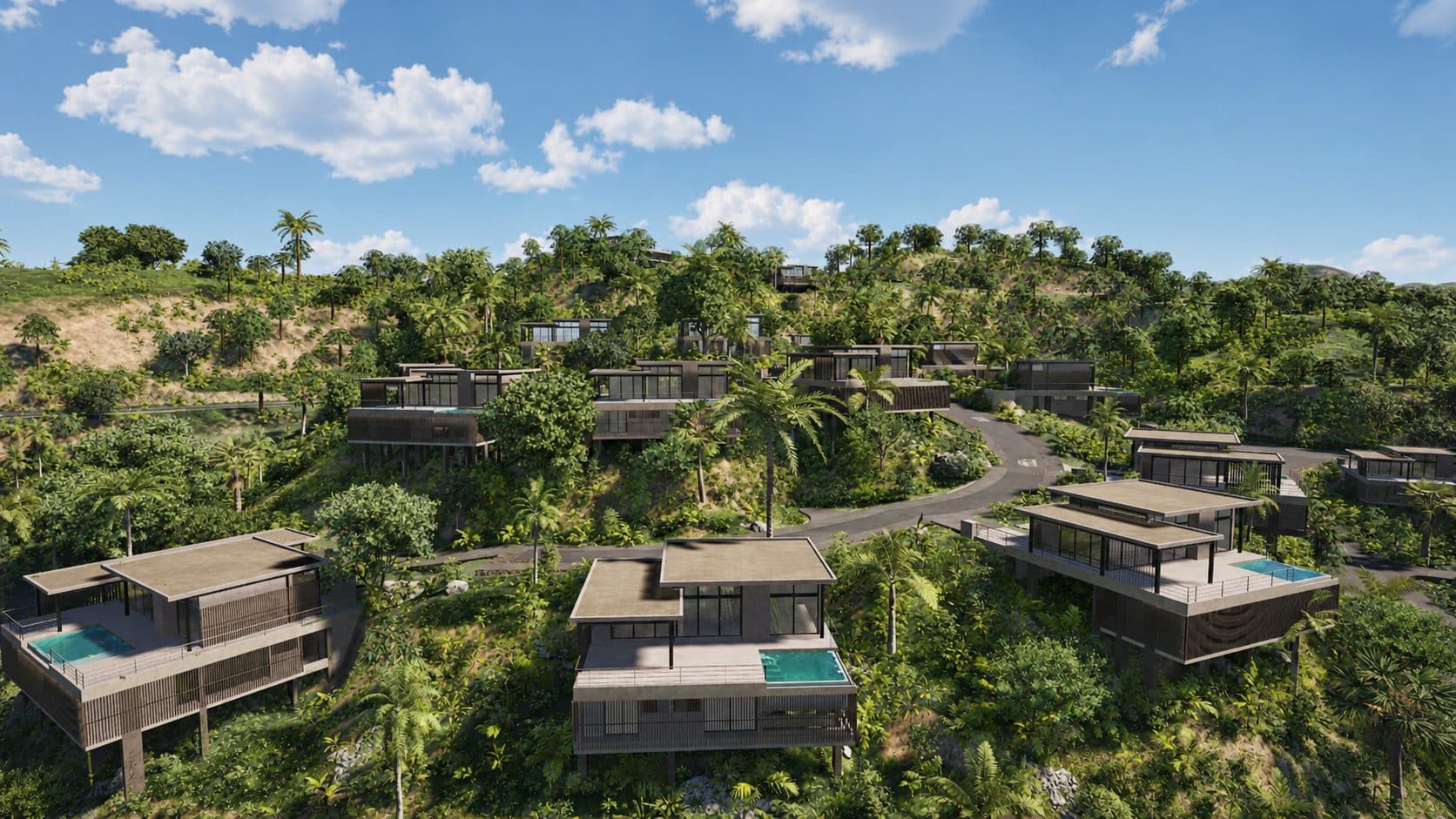
Ce que « résistant aux ouragans » signifie réellement dans les Caraïbes — toitures, vitrages anti-impact, noyaux structurels et résilience du site. Les détails qui décident si une villa tient debout au matin.
La plupart des discours marketing « prêts pour les ouragans » dans l'immobilier caribéen se résument à un paragraphe de formules vagues sur une construction renforcée. En réalité, la différence entre une villa qui survit à une tempête de catégorie 3 et une villa qui n'y survit pas se joue sur quatre ou cinq détails précis — fixation de la toiture, résistance des vitrages, noyau structurel et géométrie du site — et presque rien d'autre.
Cet article détaille ce que signifie réellement « résistant aux ouragans » dans le contexte dominicain, quels sont les modes de défaillance, et comment les normes de construction de Sienna répondent à chacun d'eux.
Points clés à retenir
- Les Caraïbes enregistrent en moyenne une douzaine de tempêtes nommées par saison ; la côte nord dominicaine se situe sur la trajectoire historique, mais elle est partiellement protégée par la Cordillera Septentrional.
- La toiture, les fenêtres et les portes constituent les trois points de rupture lors des dommages liés aux tempêtes tropicales — bien les concevoir, et la structure tient généralement bon.
- Les villas Sienna utilisent des noyaux structurels en béton armé et des dalles de toiture en béton coulé ; des vitrages renforcés et des volets anti-tempête extérieurs sont proposés en option.
- La géométrie du site compte autant que les détails de la villa — l'implantation de Sienna suit la topographie, préservant les brise-vent naturels et évitant les terrassements massifs qui aggravent le ruissellement.
- Des normes de construction vérifiables se traduisent par des conditions d'assurance nettement meilleures et une valeur de revente plus solide, dans un marché où les acheteurs intègrent de plus en plus le risque de tempête dans leurs calculs.
Que signifie réellement « résistant aux ouragans » ?
Une maison résistante aux ouragans est conçue pour résister à des charges de vent soutenues, à l'impact de débris portés par le vent, et aux effets secondaires (infiltration d'eau, fatigue structurelle, soulèvement de toiture) qui s'ensuivent. Il n'existe pas, en République dominicaine, de certification unique comparable à la cote d'impact Miami-Dade en Floride, mais les principes d'ingénierie sont les mêmes.
Les quatre piliers sont :
- Fixation et géométrie de la toiture — la toiture doit être ancrée à la structure, et non simplement à elle-même
- Vitrages et ouvertures — les fenêtres et les portes sont les points de rupture les plus fréquents ; dès qu'une fenêtre cède, la pression interne grimpe en flèche et la toiture peut se soulever
- Noyau structurel — le cheminement des charges, des fondations jusqu'à la toiture, doit être continu et suffisamment renforcé
- Atténuation au niveau du site — drainage, végétation et topographie qui absorbent l'impact de la tempête au lieu de le canaliser
La plupart des dommages causés par les tempêtes dans les Caraïbes ne résultent pas d'une défaillance structurelle catastrophique. Il s'agit plutôt d'un enchaînement qui démarre lorsque l'un de ces quatre piliers cède : une fenêtre cède, la pression interne augmente, la toiture se soulève partiellement, l'eau pénètre dans l'enveloppe du bâtiment, et ce qui aurait pu être un incident maîtrisé devient une réparation de plusieurs mois.
La réalité des ouragans dans les Caraïbes
Le bassin atlantique produit en moyenne une douzaine de tempêtes nommées par saison type, avec un pic d'activité entre août et octobre. La République dominicaine se situe sur la trajectoire historique, mais la Cordillera Septentrional — la chaîne de montagnes qui longe la côte nord au-dessus de Las Terrenas — protège partiellement la péninsule de Samaná contre les tempêtes les plus violentes venant du nord. Les impacts directs majeurs sont historiquement rares, mais pas impossibles.
La posture de conception adéquate consiste à anticiper un événement tempétueux sérieux au cours de la vie de la villa, et à concevoir en conséquence.
Comment Sienna construit-il face aux tempêtes ?
Le cahier des charges des villas Sienna, tel que défini dans les normes de construction du projet, répond à chacun des quatre piliers :
Noyau structurel : béton armé
Chaque villa est bâtie autour d'une ossature structurelle en béton armé — colonnes et dalles en béton, avec un renforcement continu depuis les fondations jusqu'à la poutre de toiture. Il s'agit de la norme pour ce niveau de construction en République dominicaine, et cela diffère fondamentalement de la construction à ossature bois courante dans une grande partie de l'Amérique du Nord. La structure est plus lourde, le cheminement des charges est continu, et la résistance au soulèvement par le vent est nettement supérieure.
Toiture : conçue pour des charges soutenues
Les systèmes de toiture des villas sont conçus pour supporter des charges de vent tropical soutenues, avec une fixation de qualité anti-ouragan entre la structure de toiture et l'ossature en béton sous-jacente. La couche d'isolation utilise de la fibre de coco et du gravier — un assemblage de matériaux typiquement caribéen qui, au-delà de sa performance thermique, apporte de la masse et contribue à ancrer la toiture contre le soulèvement. Dans une zone cyclonique, c'est la masse et la fixation continue — et non la légèreté — qui constituent la bonne réponse.
Vitrages et ouvertures
Le vitrage standard est en aluminium et verre. Pour les propriétaires souhaitant une enveloppe renforcée sur les façades exposées, des cadres et vitrages renforcés, ainsi que des volets extérieurs, sont proposés en option. Le principe reste constant : ne pas laisser l'enveloppe céder.
Portes et systèmes de terrasse
Les portes de terrasse et les entrées principales constituent, après les fenêtres, le deuxième point de rupture le plus fréquent, en particulier sur les villas caribéennes où les grands systèmes de baies coulissantes ou pliantes sont courants. Les systèmes coulissants de Sienna sont en aluminium et verre en version standard, avec des cadres et vitrages renforcés, ainsi que des volets extérieurs, disponibles en option.
Qu'en est-il du site lui-même ?
Les détails au niveau de la villa comptent, mais les décisions prises au niveau du site comptent tout autant. Le cadre défini par Sienna intègre plusieurs dispositifs de résilience au niveau du site, que le propriétaire ne voit pas directement mais dont il bénéficie lors d'un événement tempétueux :
- L'implantation suit la topographie. Aucun terrassement massif. Les villas s'échelonnent avec la pente, préservant le relief naturel et la canopée arborée existante. L'aplanissement massif des terrains — courant dans le développement caribéen — supprime les brise-vent naturels et aggrave le ruissellement des eaux pluviales.
- Préservation des espèces indigènes. Trois espèces figurant sur la Liste rouge dominicaine — le Palma real, le Gri-gri et le Juan Colorado — sont géoréférencées sur le site et protégées individuellement. Une canopée indigène mature constitue un véritable rempart contre le vent, qu'aucune solution technique ne peut reproduire.
- Aménagements extérieurs perméables. Toutes les surfaces de stationnement sont construites avec des matériaux perméables — pavés écologiques, gravier, béton engazonné. Il s'agit d'une condition de la licence environnementale N° 0644-26, mais l'effet pratique lors d'une tempête est que les eaux pluviales s'infiltrent au lieu de se concentrer en un ruissellement destructeur.
- Drainage vers le réseau communautaire. Aucune villa ne rejette ses eaux vers les rues, les voisins ou les cours d'eau naturels. Le réseau de drainage pluvial du projet gère des volumes de tempête que le drainage dominicain local ne pourrait pas absorber.
Ce sont ces détails, souvent négligés, qui déterminent les résultats. L'architecture visible compte moins que la géométrie du site sur lequel elle repose.
Quel est l'impact sur l'assurance et la revente ?
Le marché de l'assurance dans les Caraïbes s'est nettement durci au cours de la dernière décennie. Les assureurs intègrent explicitement le risque de tempête dans leurs calculs, et différencient de plus en plus leurs offres selon la qualité de construction. Une villa dotée de dispositifs anti-ouragan vérifiables — vitrage anti-impact sur la façade exposée aux vents dominants, ossature en béton armé, toiture conçue en conséquence — bénéficie de conditions de prime nettement meilleures que la moyenne régionale.
À la revente, la même logique s'applique. Les acheteurs caribéens sont plus avertis qu'il y a dix ans. Lorsqu'un acheteur demande quelle est la spécification de votre toiture ou si votre vitrage est certifié anti-impact, la bonne réponse est une réponse précise — et un projet dont ces réponses sont inscrites dans les normes de construction, et non simplement promises dans une brochure, bénéficie d'une prime de valeur.
Le tableau d'ensemble : les recherches de Knight Frank sur la fortune ont mis en évidence une attention croissante des acheteurs à la résilience climatique sur les marchés haut de gamme, et les Caraïbes constituent l'une des régions où cette attention se concentre le plus rapidement.
En résumé
La résistance aux ouragans dans les Caraïbes se joue sur quatre détails bien maîtrisés : fixation et géométrie de la toiture, vitrages et ouvertures, noyau structurel, et atténuation au niveau du site. Sienna répond aux piliers structurels en standard — béton armé, des fondations jusqu'à la dalle de toiture — avec des vitrages renforcés et des volets extérieurs disponibles pour les propriétaires souhaitant aller plus loin.
Pour retrouver l'ensemble des détails de construction en un seul endroit, l'aperçu de la vie durable couvre l'intégralité du sujet. Pour visiter une villa achevée et constater comment ces spécifications se concrétisent, organisez un Discovery Tour ou parcourez les modèles de villas.
Restez informé
Des questions à ce sujet ?
Parlez directement à notre équipe commerciale — nous vous répondrons sur WhatsApp ou par téléphone.
Écrit par
Sienna Terrenas Editorial Team
The Sienna Terrenas editorial team covers buying, owning, and living in Las Terrenas, Dominican Republic — from the purchase process and CONFOTUR tax strategy to villa construction and Caribbean community life, drawing on the team's on-the-ground experience in the area. Rencontrez l'équipe Sienna Terrenas.


