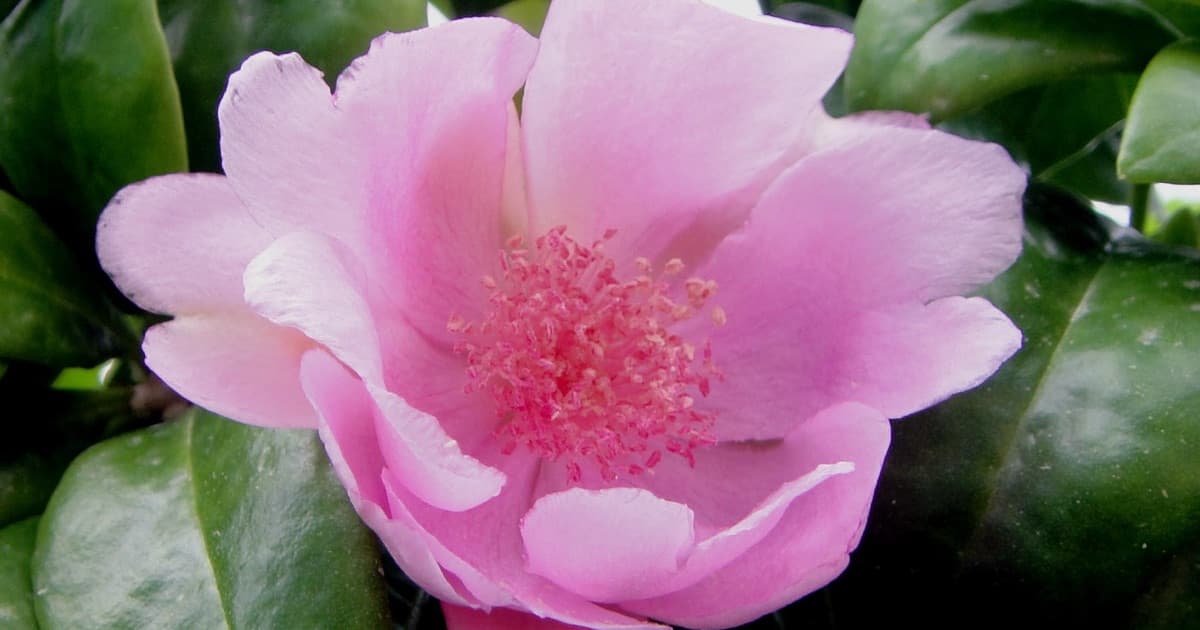
The Dominican Republic's national flower is the Bayahibe rose — an endemic leafy cactus that is critically endangered. Here's its story, why it's disappearing, and how it fits into the wider fight to protect DR flora.
The national flower of the Dominican Republic is the Bayahibe rose (Pereskia quisqueyana), a spiny leafy cactus with delicate pink blooms that grows wild in only one small corner of the country — the coast around Bayahibe in the southeast. It is critically endangered, and in the wild it survives as a scattering of individual plants, most of them male, which makes natural reproduction painfully rare. It replaced the mahogany flower as the national symbol in 2011.
The Bayahibe rose at a glance
| Fact | Detail |
|---|---|
| Scientific name | Pereskia quisqueyana |
| Spanish name | Rosa de Bayahíbe |
| Plant type | Leafy cactus — not a true rose |
| Flower | Pink, about the size of a wild rose |
| Native range | Dry coastal scrub around Bayahibe, La Altagracia province |
| National flower since | 2011 (Law 146-11), replacing the mahogany flower |
| Conservation status | Critically endangered (IUCN Red List) |
What You Need to Know
- The Dominican Republic's national flower is the Bayahibe rose (Pereskia quisqueyana), a rare leafy cactus endemic to the Bayahibe area.
- It is critically endangered — a naturally tiny wild population, heavily skewed toward male plants, plus coastal development pressure.
- It became the national flower in 2011, replacing the mahogany flower (caoba).
- The DR's wider protected flora includes the Palma real (royal palm), Gri-gri, and Juan Colorado — three of the 153 plant species our environmental impact study documented on the Sienna site in El Jamito.
- Understanding protected species matters for anyone building in the DR: it shapes what you can clear, plant, and preserve.
What Is the Bayahibe Rose?
The Bayahibe rose is a member of the Pereskia genus — an unusual group of cacti that, unlike the spiny succulents most people picture, actually grow real leaves. It reaches shrub-to-small-tree size, carries thorns along its stems, and produces bright pink flowers roughly the size of a wild rose, which is where the common name comes from. It is not a rose at all botanically.
An endemic species with a single home
Pereskia quisqueyana is endemic to the Dominican Republic, meaning it grows naturally nowhere else on Earth. Its native range is essentially the dry coastal scrub around Bayahibe in La Altagracia province, near the gateway to Parque Nacional del Este. That razor-thin geographic range is exactly what makes an endemic species so fragile: lose the habitat, and you lose the species globally, not just locally.
Why it became a national symbol
The Dominican Republic adopted the Bayahibe rose as its national flower in 2011. Before that, the national flower had been the flower of the mahogany tree (caoba), which remains the national tree. Choosing an endemic, endangered species as the national flower was a deliberate conservation statement — a symbol that only exists here, and one worth protecting.
Why Is the Bayahibe Rose Endangered?
The Bayahibe rose is critically endangered for two reinforcing reasons: it started with a naturally tiny wild population, and human pressure on its narrow coastal habitat has squeezed it further. The International Union for Conservation of Nature, which maintains the global Red List of threatened species, classifies species by extinction risk on its IUCN Red List, and Pereskia quisqueyana sits at the severe end of that scale.
A reproduction problem few plants face
Here's the detail that makes this species unusually vulnerable: the Bayahibe rose is dioecious, meaning individual plants are either male or female. In the surviving wild population, the plants are overwhelmingly male. With very few females, natural seed production barely happens. A plant that struggles to reproduce sexually can't easily rebuild its own numbers, even with protection.
Coastal development in its only habitat
The southeastern coast around Bayahibe is also prime tourism and resort territory. When you overlay heavy coastal development onto a species that lives in one narrow strip of dry forest, the math is unforgiving. Habitat clearance, not any single dramatic event, is the quiet driver of decline for most endemic Caribbean plants.
Conservation efforts underway
Botanical gardens and Dominican conservation programs have propagated the Bayahibe rose in cultivation, which is why you can now see it planted in gardens and public spaces well outside its native range. Cultivation buys the species time, but a plant that thrives in a botanical garden is not the same as a self-sustaining wild population. The long game is protecting habitat.
The Wider Picture: Protected Flora of the Dominican Republic
The Bayahibe rose is the most famous endangered plant in the DR, but it is far from the only one. The country sits inside the Caribbean biodiversity hotspot — one of the planet's most species-rich and most threatened regions — and its flora includes hundreds of endemic and protected species.
Why one island holds so many unique plants
Islands breed endemism. Isolated from continental gene pools, plants on Hispaniola evolved along their own paths, producing species found nowhere else. That richness is precisely what makes Caribbean conservation urgent: a huge share of the region's plants are both unique and under pressure. The Dominican environmental authority, MIMARENA, administers the country's protected-species framework under environmental Law 64-00.
The role of environmental law
In the DR, you cannot simply clear land and build. Larger projects require an environmental impact study (EsIA) and an environmental license that carries binding obligations to protect documented species. That legal layer is what turns "we should protect plants" into "here is exactly what you must preserve on this parcel." For a fuller picture of how green rules shape building here, our guide to sustainable construction practices for the tropics walks through what actually matters on the ground.
Protected Species on Our Own Site in El Jamito
Our environmental impact study documented 153 plant species on the Sienna site in the hills of El Jamito above Las Terrenas — and several of them are protected or culturally significant Dominican species. This is first-party data from our own project documents, not a general estimate.
Three species worth knowing
Among the flora our EsIA recorded on site:
| Species | Common name | Why it matters |
|---|---|---|
| Roystonea hispaniolana | Palma real (royal palm) | The Dominican national tree emblem's cousin; a protected native palm central to Hispaniola's landscape |
| Bucida buceras | Gri-gri | A dense native hardwood, ecologically important and slow-growing |
| Juan Colorado | Juan Colorado | A native tree valued locally, part of the site's protected flora inventory |
Our environmental license, License 0644-26, carries 57 binding environmental obligations — and protecting documented native species is central to them. That's why villas on sloped terrain are built on columns to preserve root systems, and why our building guidelines govern what can and cannot be cleared.
From regulation to design
Protecting flora isn't only about not cutting trees. It shapes drainage, foundation choices, and landscaping — our guidelines lean on native and earth-tone palettes and building around existing trees rather than flattening the land. If you want to see how biodiversity commitments translate into an actual community, our overview of sustainability in Samaná connects the dots.
Curious what responsible development looks like before you ever consider buying? The simplest next step is to come and see it: the Discovery Tour is four nights in Las Terrenas with property visits and the legal and market sessions.
How to See and Support the Bayahibe Rose
You can see the Bayahibe rose most reliably in cultivation — in botanical gardens and public plantings around the country — rather than by hunting for wild plants in its fragile native scrub near Bayahibe.
Responsible ways to engage
- Visit botanical gardens and conservation projects that propagate native species.
- Never collect or dig wild plants — for an endemic species, every individual matters.
- Support developments and businesses that document and protect flora rather than clear it.
- Learn the wider story: the DR's biodiversity, from the palmchat, the national bird, to the humpbacks of Samaná Bay, is part of the same conservation picture. Our Samaná peninsula guide covers the region's natural richness.
The Bayahibe rose is a small pink flower doing a big symbolic job: it reminds a whole country that some things exist in exactly one place and nowhere else.
Frequently Asked Questions
What is the national flower of the Dominican Republic?
The national flower of the Dominican Republic is the Bayahibe rose (Pereskia quisqueyana), an endemic leafy cactus with pink blooms that grows naturally only around Bayahibe in the country's southeast. It became the national flower in 2011.
Is the Bayahibe rose actually a rose?
No. Despite the name, it is not a rose. It is a species of Pereskia, an unusual group of cacti that grow true leaves. The "rose" name comes from its pink, rose-sized flowers.
Why is the Bayahibe rose endangered?
It is critically endangered because its wild population is naturally tiny, heavily skewed toward male plants (which limits natural reproduction), and its single narrow coastal habitat has been squeezed by development.
What is the national tree of the Dominican Republic?
The national tree is the caoba (West Indian mahogany). The mahogany flower was the national flower until the Bayahibe rose replaced it in 2011.
Does building in the Dominican Republic require protecting native plants?
Yes. Larger projects require an environmental impact study and an environmental license under Law 64-00 that carries binding obligations to protect documented species. Our own License 0644-26 includes 57 such obligations covering the 153 plant species on our site.
The Takeaway
The Bayahibe rose tells you something real about the Dominican Republic: this is a place where a single small flower, found nowhere else on Earth, was chosen to represent an entire nation. That same endemism runs through the hills above Las Terrenas, where our own environmental study logged 153 plant species — Palma real, Gri-gri, Juan Colorado among them — now protected under License 0644-26.
If the way a place treats its native species matters to you, you're already asking the right questions. Book the Discovery Tour to explore how a values-aligned development in the DR fits your goals, or read more about green building certifications and what they actually mean for a Caribbean property.
Cover photo: Bayahibe rose (Pereskia quisqueyana) by Ymleon, public domain, via Wikimedia Commons.
Stay in the loop
Have questions about this?
Talk to our sales team directly — we'll answer on WhatsApp or by phone.
Written by
Sienna Terrenas Editorial Team
The Sienna Terrenas editorial team covers buying, owning, and living in Las Terrenas, Dominican Republic — from the purchase process and CONFOTUR tax strategy to villa construction and Caribbean community life, drawing on the team's on-the-ground experience in the area. Meet the Sienna Terrenas team.


