Qué significa realmente "resistente a huracanes" en el Caribe: sistemas de techo, vidriado resistente a impactos, núcleos estructurales y resiliencia a nivel de terreno.
La mayoría del marketing sobre viviendas "preparadas para huracanes" en el sector inmobiliario caribeño se reduce a un párrafo de lenguaje vago sobre "construcción reforzada". La realidad es que la diferencia entre una villa que sobrevive a una tormenta de categoría 3 y una que no lo hace se decide por cuatro o cinco detalles concretos —fijación del techo, calificación del vidriado, núcleo estructural y geometría del terreno— y prácticamente nada más.
Este artículo recorre qué significa realmente "resistente a huracanes" en el contexto dominicano, cuáles son los modos de falla, y cómo los lineamientos de construcción de Sienna abordan cada uno de ellos.
Puntos clave
- El Caribe registra en promedio alrededor de una docena de tormentas con nombre por temporada; la costa norte dominicana se encuentra en la trayectoria histórica, pero está parcialmente protegida por la Cordillera Septentrional.
- El techo, las ventanas y las puertas son los tres puntos de falla en los daños por tormentas tropicales: si esos elementos están bien resueltos, la estructura generalmente resiste.
- Las villas de Sienna emplean núcleos estructurales de concreto reforzado y losas de techo de concreto vaciado; el vidriado reforzado y las persianas exteriores contra tormentas se ofrecen como mejoras opcionales.
- La geometría del terreno importa tanto como el detalle constructivo de la villa: la huella de Sienna sigue la topografía, preservando cortavientos naturales y evitando los grandes movimientos de tierra que empeoran la escorrentía.
- Los estándares de construcción verificables se traducen en condiciones de seguro sustancialmente mejores y en un valor de reventa más sólido, en un mercado donde los compradores evalúan cada vez más el riesgo de tormentas.
¿Qué significa realmente "resistente a huracanes"?
Una vivienda resistente a huracanes es aquella diseñada para soportar cargas de viento sostenidas, el impacto de escombros arrastrados por el viento y los efectos secundarios (intrusión de agua, fatiga estructural, levantamiento del techo) que se producen después. No existe un número de certificación único en República Dominicana como el que tiene Florida con la calificación de impacto de Miami-Dade, pero los principios de ingeniería son los mismos.
Los cuatro pilares son:
- Fijación y geometría del techo — el techo debe estar anclado a la estructura, no solo a sí mismo
- Vidriado y aberturas — las ventanas y puertas son los puntos de brecha más comunes; una vez que una ventana se rompe hacia adentro, la presión interna se dispara y el techo puede levantarse
- Núcleo estructural — la trayectoria de carga desde la cimentación hasta el techo debe ser continua y estar adecuadamente reforzada
- Mitigación a nivel de terreno — drenaje, vegetación y topografía que absorben el impacto de la tormenta en lugar de canalizarlo
La mayoría de los daños por tormentas en el Caribe no son fallas estructurales catastróficas. Es la cadena de eventos que comienza cuando uno de estos cuatro elementos falla: una ventana se rompe hacia adentro, la presión interna sube, el techo se levanta parcialmente, el agua penetra en la envolvente, y lo que habría sido un evento sin mayores consecuencias se convierte en meses de reparación.
La realidad de los huracanes en el Caribe
La cuenca del Atlántico produce alrededor de una docena de tormentas con nombre en una temporada típica, con la actividad máxima entre agosto y octubre. República Dominicana se encuentra en la trayectoria histórica, pero la Cordillera Septentrional —la cadena montañosa que corre a lo largo de la costa norte, por encima de Las Terrenas— protege parcialmente a la península de Samaná de las tormentas más severas que siguen la trayectoria norte. Los impactos directos importantes son poco frecuentes históricamente, pero no imposibles.
La postura de diseño correcta es asumir que ocurrirá un evento de tormenta serio durante la vida útil de la villa, y diseñar en consecuencia.
¿Cómo construye Sienna para las tormentas?
La especificación de las villas de Sienna, establecida en los lineamientos de construcción del proyecto, aborda cada uno de los cuatro pilares:
Núcleo estructural: concreto reforzado
Cada villa se construye alrededor de un marco estructural de concreto reforzado —columnas y losas de concreto, con refuerzo continuo desde la cimentación hasta la viga del techo. Este es el estándar de la construcción dominicana en este nivel, y es fundamentalmente distinto de la construcción con estructura de madera común en gran parte de Norteamérica. La estructura es más pesada, la trayectoria de carga es continua, y la resistencia al levantamiento por viento es sustancialmente mayor.
Techo: diseñado para carga sostenida
Los sistemas de techo de las villas están diseñados para soportar cargas de viento tropical sostenidas, con fijaciones de grado huracán entre la estructura del techo y el marco de concreto de debajo. La capa aislante emplea fibra de coco y grava —un ensamblaje de materiales nativo del Caribe que, más allá de su desempeño térmico, añade masa y ayuda a anclar el techo contra el levantamiento. La masa y la fijación continua, no la ligereza, son la respuesta correcta en una zona de huracanes.
Vidriado y aberturas
El vidriado estándar es de aluminio y vidrio. Para los propietarios que deseen una envolvente más resistente en las fachadas expuestas, se ofrecen como mejoras opcionales marcos y vidrios reforzados, así como persianas exteriores. El principio es consistente: no permitir que la envolvente se rompa.
Puertas y sistemas de terraza
Las puertas de terraza y las entradas principales son el segundo punto de brecha más común después de las ventanas, especialmente en villas caribeñas donde son habituales los grandes sistemas de puertas plegables o corredizas de terraza. Los sistemas corredizos de Sienna son de aluminio y vidrio como estándar, con marcos y vidrios reforzados, y persianas exteriores, disponibles como mejoras opcionales.
¿Qué ocurre con el terreno en sí?
El detalle a nivel de villa importa, pero las decisiones a nivel de terreno importan igual. El marco de trabajo de Sienna incluye varias características de resiliencia a nivel de terreno que un propietario no ve directamente, pero de las que se beneficia durante un evento de tormenta:
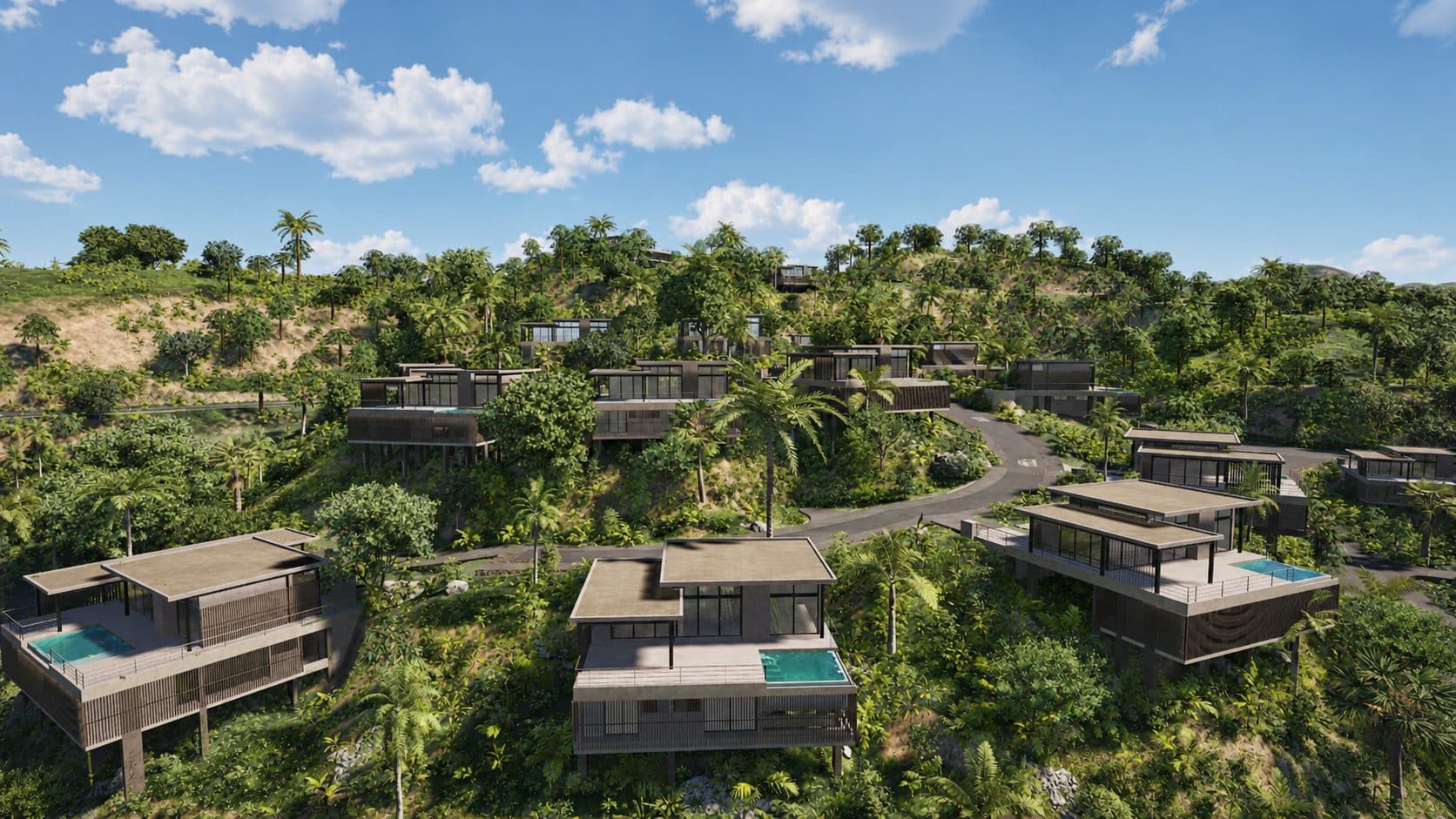
- La huella sigue la topografía. Sin grandes movimientos de tierra. Las villas se escalonan siguiendo la pendiente, preservando el contorno natural y el dosel arbóreo existente. El aplanamiento masivo del terreno —común en el desarrollo caribeño— elimina los cortavientos naturales y empeora la escorrentía pluvial.
- Preservación de especies nativas. Tres especies de la Lista Roja dominicana —Palma real, Gri-gri y Juan Colorado— están georreferenciadas en el terreno y protegidas individualmente. Un dosel arbóreo nativo maduro es un amortiguador de viento significativo que ninguna solución de ingeniería logra replicar.
- Pavimento permeable. Todas las superficies de parqueo se construyen con materiales permeables —adoquines ecológicos, grava, concreto-césped. Esta es una condición de la licencia según la Licencia Ambiental N.º 0644-26, pero el efecto práctico durante una tormenta es que el agua de lluvia se absorbe en lugar de concentrarse en una escorrentía dañina.
- Drenaje hacia el sistema comunitario. Ninguna villa descarga hacia calles, vecinos o cursos de agua naturales. La red de drenaje pluvial del proyecto maneja los volúmenes de tormenta de una manera que el drenaje dominicano local no puede.
Estos son los detalles poco vistosos que determinan los resultados. La arquitectura visible importa menos que la geometría del terreno sobre el que se asienta.
¿Qué significa esto para el seguro y la reventa?
El mercado de seguros en el Caribe se ha endurecido sustancialmente en la última década. Las aseguradoras evalúan explícitamente el riesgo de tormentas, y cada vez más diferencian según la calidad de la construcción. Una villa con detalles antihuracán verificables —vidriado resistente a impactos en la fachada de barlovento, marco de concreto reforzado, techo diseñado con ingeniería— obtiene condiciones de prima sustancialmente mejores que el promedio regional.
En la reventa, se mantiene el mismo patrón. Los compradores caribeños son más sofisticados que hace diez años. Cuando un comprador pregunta cuál es la especificación de su techo o si su vidriado tiene calificación de resistencia a impactos, la respuesta correcta es una respuesta específica —y un proyecto donde esas respuestas están escritas en los lineamientos de construcción, y no simplemente prometidas en un folleto, tiene un valor adicional.
El panorama más amplio: la investigación sobre patrimonio de Knight Frank ha registrado una atención creciente de los compradores hacia la resiliencia climática en los mercados prime, y el Caribe es una de las regiones donde esa atención se concentra más rápidamente.
La versión resumida
La resistencia a huracanes en el Caribe es una cuestión de cuatro detalles bien ejecutados: fijación y geometría del techo, vidriado y aberturas, núcleo estructural, y mitigación a nivel de terreno. Sienna aborda los pilares estructurales como estándar —concreto reforzado desde la cimentación hasta la losa del techo— con vidriado reforzado y persianas exteriores disponibles para los propietarios que deseen ir más allá.
Si desea el detalle constructivo reunido en un solo lugar, el resumen de vida sostenible lo cubre de principio a fin. Para recorrer una villa terminada y ver cómo se traduce la especificación, organice un Discovery Tour o explore los modelos de villa.
Mantente al día
¿Tienes preguntas sobre esto?
Habla directamente con nuestro equipo de ventas — te responderemos por WhatsApp o por teléfono.
Escrito por
Sienna Terrenas Editorial Team
The Sienna Terrenas editorial team covers buying, owning, and living in Las Terrenas, Dominican Republic — from the purchase process and CONFOTUR tax strategy to villa construction and Caribbean community life, drawing on the team's on-the-ground experience in the area. Conoce al equipo de Sienna Terrenas.


