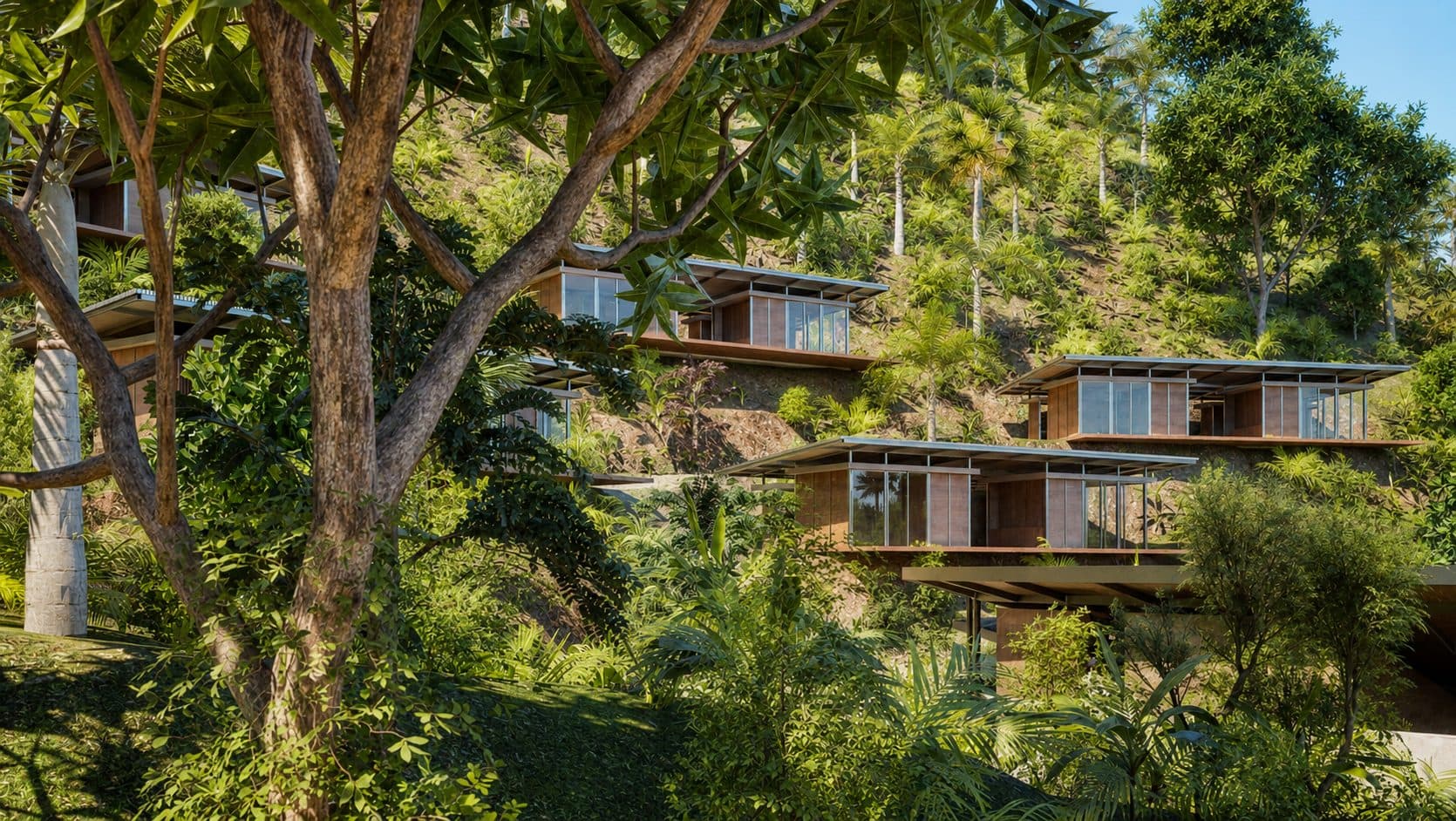
Energía solar, agua de lluvia, sépticos, internet: qué significa realmente vivir fuera de la red en República Dominicana, cuánto cuesta y por qué "listo para operar fuera de la red" supera al "totalmente fuera de la red" para casi todo comprador del Caribe.
Vivir fuera de la red en República Dominicana es más práctico de lo que la mayoría de los compradores norteamericanos o europeos esperan, y más matizado de lo que sugiere la versión de YouTube. El sol es abundante, la temporada de cultivo durante todo el año es real y la tierra rural resulta comparativamente asequible. Pero operar totalmente fuera de la red en el trópico tiene sus propios modos de falla —humedad, corrosión salina, temporada de huracanes— y la decisión inteligente para la mayoría de los compradores no es estar totalmente fuera de la red, sino un híbrido bien diseñado.
Esta guía repasa cómo se ve realmente cada subsistema "fuera de la red" en la RD, cuáles son los costos realistas y dónde se ubican las concesiones.
Puntos clave
- La República Dominicana promedia aproximadamente ocho horas de luz solar aprovechable al día, lo que convierte a la energía solar residencial en una de las apuestas energéticas más económicas del Caribe.
- Estar totalmente fuera de la red es alcanzable, pero materialmente más caro que estar "listo para operar fuera de la red": preequipado para energía solar y agua de lluvia, con conexión a la red como respaldo.
- El agua, no la energía, es el problema más difícil en la costa norte. Planifique con un pozo profundo o un sistema de agua de lluvia + tratamiento, y no solo con el suministro municipal.
- La temporada de huracanes cambia las cuentas. Los bancos de baterías, los tanques de agua y los paneles fotovoltaicos necesitan montaje resistente a tormentas y cerramientos protegidos.
- La configuración más defendible para una villa caribeña es energía solar conectada a la red con respaldo de baterías, un pozo tratado o sistema de agua de lluvia, séptico in situ y un respaldo de internet satelital.
¿Qué significa realmente "fuera de la red" en República Dominicana?
Estar fuera de la red suele implicar cuatro sistemas separados: energía, agua, aguas residuales y conectividad. En la República Dominicana rural, "fuera de la red" rara vez significa los cuatro; por lo general significa algunos de ellos.
La red dominicana (EDENORTE en la costa norte) es confiable en los pueblos grandes e irregular en las lomas por encima de ellos. Los cortes ocurren, especialmente en la temporada de lluvias. Eso ha entrenado a los hogares dominicanos para ser parcialmente autosuficientes: las cisternas, los inversores y los tanques de gas son estándar, no exóticos. Así que estar "curioso por lo fuera de la red" en la RD está mucho más cerca de la línea base local de lo que estaría en Toronto o Berlín.
Un enfoque útil: no se pregunte si va a operar fuera de la red. Pregúntese cuál de los cuatro subsistemas puede desacoplar productivamente del servicio público, y a qué costo.
Energía: ¿qué puede alimentar realmente con energía solar?
Una villa moderna con especificación Sienna —tres habitaciones, piscina con sistema de sal, juego completo de electrodomésticos y aire acondicionado mini split añadido como upgrade— puede funcionar casi por completo con energía solar con el dimensionamiento adecuado. Las razones son específicas del clima:
- La costa norte dominicana promedia aproximadamente ocho horas solares aprovechables al día, durante todo el año. Más que casi cualquier lugar de los EE. UU. continentales o Europa: la Agencia Internacional de la Energía registra la irradiación solar del Caribe entre las más fuertes del hemisferio occidental.
- La orientación y la inclinación de los techos en las villas Sienna están prediseñadas para aceptar un arreglo fotovoltaico, incluyendo las trayectorias de conductos, la capacidad de carga estructural del techo y la ubicación del inversor. La activación queda a criterio del propietario; la infraestructura no. (Consulte las prácticas de construcción en el pilar de vida sostenible para el detalle del lado constructivo).
- Las villas se entregan de serie con equipos de bajo consumo: iluminación LED en toda la casa, ventiladores de techo con control remoto en cada ambiente principal y un calentador eléctrico de paso que calienta solo el agua que usas. Los ventiladores asumen buena parte de la carga de climatización, y el aire acondicionado se añade solo donde el propietario lo quiere. Una carga base más baja significa que un arreglo más pequeño rinde más.
Un sistema fotovoltaico residencial de 6 a 10 kW, con un banco de baterías dimensionado para las cargas nocturnas, es una configuración típica para una villa de tres habitaciones totalmente desacoplada. Los sistemas híbridos —conectados a la red con respaldo de baterías— son más económicos y, podría decirse, más resilientes para la temporada de tormentas.
Agua: el problema más difícil de lo que cree
La energía se lleva los titulares. El agua es donde la mayoría de los proyectos caribeños fuera de la red rinden por debajo de lo esperado.
El agua municipal en Las Terrenas existe, pero no es uniformemente confiable. El agua fuera de la red en la RD suele significar una de tres opciones:
| Fuente | Cómo se ve | Salvedades |
|---|---|---|
| Pozo profundo | Perforación de 30-80 m, bomba eléctrica | Requiere pruebas, tratamiento, bomba resistente a tormentas |
| Recolección de agua de lluvia | Captación en techo, desviador de primer flujo, cisterna | Necesita tratamiento; suministro estacional |
| Combinado | Pozo como base, agua de lluvia como complemento | Mayor confiabilidad, mayor capex |
Las tres necesitan filtración y tratamiento con UV o cloro para ser potables. El enfoque combinado es donde aterrizan la mayoría de las villas caribeñas bien diseñadas, porque le da un margen cuando una fuente tiene un mal mes.
En Sienna específicamente, cada villa se construye con su propio sistema individual de tratamiento de aguas residuales, diseñado por solar e incluido en la villa. Eso elimina uno de los cuatro subsistemas "fuera de la red" de su árbol de decisiones.
¿Y las aguas residuales y los residuos?
En la RD rural, un sistema séptico correctamente diseñado con campo de infiltración es la opción por defecto. Es confiable, bien comprendido por los contratistas locales y económico de mantener. La concesión honesta es la protección de las aguas subterráneas: los campos de infiltración mal ejecutados pueden contaminar un pozo.
El tratamiento individual por villa de Sienna es una de las razones por las que el proyecto califica bajo el marco de la Licencia Ambiental dominicana: el Ministerio de Medio Ambiente mantiene el marco regulatorio que los proyectos con licencia deben seguir. Para un propietario, el efecto práctico es un subsistema menos que diseñar, monitorear y reemplazar.
Conectividad: el factor decisivo moderno
Si no puede trabajar desde su villa, "fuera de la red" es solo acampar. Las Terrenas tiene servicio de fibra en el pueblo (Claro, Altice) y servicio de microondas en las lomas. Starlink funciona como respaldo; muchos trabajadores remotos en Samaná lo usan como su conexión principal.
Planifique con ambos. Fibra cuando esté disponible, satélite cuando no lo esté.
Costo: ¿qué debería presupuestar realmente?
Es difícil dar cifras honestas sin una especificación concreta, pero aquí están los rangos de trabajo para la configuración de una villa caribeña de tres habitaciones. Trátelos como rangos de planificación, no como cotizaciones.
- Energía solar conectada a la red con respaldo de baterías (6-10 kW + 10-15 kWh de almacenamiento): un desembolso significativo de cinco cifras, con una amortización medida en pocos años dado el fuerte sol y las tarifas eléctricas dominicanas.
- Pozo profundo con tratamiento: cinco cifras medias, más el reemplazo anual de filtros y lámparas UV.
- Sistema de agua de lluvia con cisterna: según el área de captación del techo, cinco cifras bajas a medias, más el tratamiento.
- Conectividad de respaldo (Starlink): bajo costo recurrente; el hardware es un gasto único.
Para la mayoría de los compradores, el punto de partida correcto no es "totalmente fuera de la red". Es "listo para operar fuera de la red": es decir, que la villa esté diseñada de modo que cualquier subsistema pueda desacoplarse más tarde, con un menor costo de adaptación, cuando el propietario esté listo.
Dónde tiene sentido operar fuera de la red, y dónde no
Operar totalmente fuera de la red tiene sentido cuando:
- El costo de conexión a la red sería alto (tierra remota, lejos de la línea)
- El propietario tiene la intención de estar en el sitio durante todo el año y quiere independencia energética e hídrica
- El terreno tiene la geometría protegida contra tormentas para montar y proteger los sistemas
Tiene menos sentido cuando:
- La red ya está en el límite de la propiedad
- El propietario no es residente: hay complejidad operativa en mantener sistemas fuera de la red desde el extranjero
- La exposición a tormentas hace que la redundancia (red + solar + batería) sea más segura que solo la energía solar
El enfoque Sienna —y nuestra recomendación para la mayoría de los compradores— es energía solar conectada a la red con respaldo de baterías, pozo tratado o agua de lluvia, tratamiento in situ o comunitario para las aguas residuales, y un respaldo satelital para la conectividad. Obtiene la mayor parte de la resiliencia y la economía energética de estar totalmente fuera de la red, con menos riesgo durante la temporada de tormentas y menos carga de mantenimiento continuo.
La versión más corta
La República Dominicana es uno de los mejores mercados del Caribe para vivir fuera de la red o cerca de ella, principalmente porque el sol es generoso, la tierra es asequible y la autosuficiencia parcial ya forma parte de la norma local. La jugada inteligente, según nuestra experiencia, es estar diseñado para el desacoplamiento total pero mantenerse híbrido en la práctica. Esa configuración sobrevive a la temporada de tormentas, le simplifica la vida como propietario no residente y aún así captura los beneficios de costo operativo de la energía solar y el agua de lluvia.
¿Quiere ver cómo una villa Sienna está prediseñada para esto? Organice un Discovery Tour, o lea la descripción general de vida sostenible para el detalle completo del lado constructivo.
Mantente al día
¿Tienes preguntas sobre esto?
Habla directamente con nuestro equipo de ventas — te responderemos por WhatsApp o por teléfono.
Escrito por
Sienna Terrenas Editorial Team
The Sienna Terrenas editorial team covers buying, owning, and living in Las Terrenas, Dominican Republic — from the purchase process and CONFOTUR tax strategy to villa construction and Caribbean community life, drawing on the team's on-the-ground experience in the area. Conoce al equipo de Sienna Terrenas.


