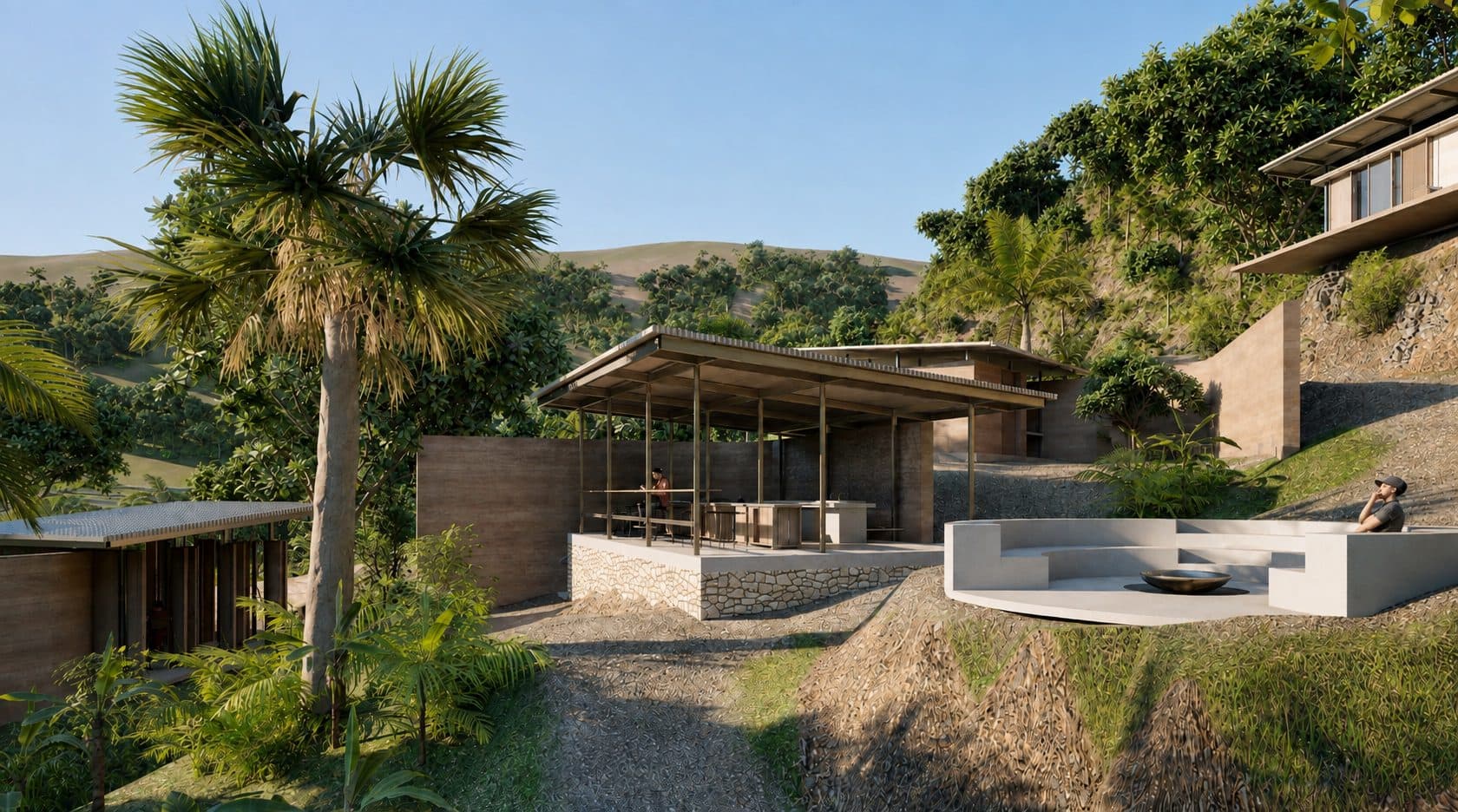
Las certificaciones de construcción verde como LEED hacen más que señalar sostenibilidad: afectan directamente el valor de reventa, los rendimientos de alquiler y los costos operativos en Las Terrenas.
Certificaciones de Construcción Verde: Qué Significan para su Inversión en el Caribe
Las certificaciones de construcción verde son estándares de calidad verificados de forma independiente que confirman que una propiedad cumple con criterios específicos de eficiencia energética, materiales, uso del agua y calidad del aire interior. Para los compradores que consideran la construcción sostenible en el Caribe, estas certificaciones se traducen directamente en menores costos operativos, valores de reventa más sólidos y una tesis de inversión más defendible.
Puntos Clave
- LEED y certificaciones equivalentes ofrecen verificación de terceros de que una propiedad cumple con estándares de eficiencia medibles, no solo afirmaciones de marketing
- Los edificios verdes certificados normalmente logran primas de reventa más altas y atraen inquilinos de alquiler más exigentes
- Las certificaciones cubren cinco áreas centrales: energía, materiales, agua, calidad del aire interior e impacto en el sitio
- En el contexto caribeño, los estándares de preparación solar, gestión del agua y resiliencia ante tormentas importan tanto como las categorías convencionales de LEED
- El marco de construcción sostenible de Sienna aborda las cinco áreas, con materiales de origen local donde es práctico e infraestructura preparada para energía solar en cada propiedad
¿Qué Es una Certificación de Construcción Verde — y Por Qué Importa?
Piense en una certificación de construcción verde como pensaría en una calificación energética en un automóvil o una etiqueta orgánica en los alimentos. Le indica que un organismo independiente ha verificado que el producto cumple con un estándar definido, en lugar de depender del lenguaje de marketing propio del desarrollador.
En el sector inmobiliario, esta distinción importa enormemente. "Eco-friendly" y "sostenible" son términos no regulados; cualquier desarrollador puede usarlos. Una certificación no puede autootorgarse. Requiere documentación, auditorías de terceros y cumplimiento continuo.
Las Certificaciones Más Relevantes para el Sector Inmobiliario Caribeño
Varios marcos aparecen en la construcción sostenible del Caribe y América Latina:
- LEED (Leadership in Energy and Environmental Design) — el sistema más reconocido a nivel mundial, administrado por el U.S. Green Building Council. LEED califica los edificios según criterios de energía, agua, materiales, ambiente interior y sitio, otorgando los niveles Certified, Silver, Gold o Platinum.
- EDGE (Excellence in Design for Greater Efficiencies) — un programa de IFC/Banco Mundial diseñado para mercados emergentes, que requiere al menos un 20% de mejora en energía, agua y energía incorporada en los materiales frente a un edificio de referencia.
- EarthCheck — la principal certificación con base científica para el turismo sostenible y desarrollos hoteleros, ampliamente utilizada en propiedades de resort y residencial-resort en el Caribe. El programa de evaluación comparativa de EarthCheck cubre el desempeño operativo junto con los estándares de construcción.
- Esquemas nacionales y regionales — la República Dominicana aún no cuenta con un organismo de certificación nacional independiente, pero los desarrollos que aplican criterios LEED o EDGE obtienen una diferenciación competitiva en un mercado donde la mayoría de los proyectos no cuenta con verificación de terceros en absoluto.
Cómo Afectan las Calificaciones Energéticas sus Costos Operativos (y el ROI)
¿Qué significa realmente una calificación energética para su bolsillo?
La calificación energética de una propiedad —ya se exprese en una puntuación de créditos LEED, un porcentaje de mejora EDGE, o una simple cifra de kilovatios-hora por metro cuadrado— determina cuánto gasta en electricidad y refrigeración cada mes. En el Caribe, donde el aire acondicionado puede representar el mayor costo operativo individual del hogar, esto no es una consideración marginal.
Preparación Solar como Estándar Base
En Sienna, cada lote y villa incluye infraestructura preparada para energía solar —conductos, soportes para paneles y espacio para inversores— para que los compradores puedan integrar sistemas fotovoltaicos sin costos de adaptación posterior. Las propiedades diseñadas con refrigeración pasiva (ventilación cruzada, aleros de techo, sombreado natural) reducen la carga base de refrigeración incluso antes de considerar la energía solar.
Según la Agencia Internacional de Energías Renovables (IRENA), los costos de energía solar fotovoltaica en el Caribe han caído sustancialmente en la última década, haciendo que la economía solar sea cada vez más atractiva para los propietarios que adelantan la inversión en infraestructura en la etapa de construcción en lugar de adaptarla posteriormente.
Menores Costos Operativos
El diseño de Sienna busca costos operativos menores que los de una villa construida de manera convencional de tamaño equivalente en Las Terrenas, mediante la orientación del edificio, estándares de aislamiento, paisajismo nativo que reduce el efecto de isla de calor, y los sistemas preparados para energía solar mencionados anteriormente. Durante un período de tenencia de 10 a 15 años, ese diferencial de costo operativo se acumula de manera significativa frente a su ingreso neto por alquiler.
Certificaciones de Materiales: Por Qué "Local y Sostenible" Es una Afirmación Verificable
¿Realmente importa de dónde provienen los materiales de construcción?
Desde el punto de vista de la inversión, sí, por dos razones. Primero, los materiales de origen local conllevan menor carbono incorporado y suelen estar mejor adaptados al desempeño en clima tropical (resistencia a la humedad, masa térmica). Segundo, las cadenas de suministro de materiales de origen local son más cortas y más resilientes ante las interrupciones de importación que afectan a los proyectos de construcción caribeños construidos enteramente con bienes importados.
Qué Significa el Abastecimiento Local en Sienna
Sienna obtiene materiales de construcción localmente siempre que es práctico: piedra, madera, agregados de concreto y materiales de acabado provienen de proveedores dominicanos. Los sistemas mecánicos, eléctricos y de acristalamiento recurren a proveedores internacionales seleccionados por especificaciones de desempeño relevantes para entornos tropicales.
Carbono Incorporado y la Lista de Debida Diligencia del Comprador
Al comparar desarrollos, solicite un cronograma de materiales y pida evidencia de la procedencia del proveedor. Un desarrollador sostenible creíble podrá compartir esta documentación; uno que se apoya únicamente en lenguaje de marketing no podrá hacerlo.
Certificaciones clave a buscar en los materiales:
- FSC (Forest Stewardship Council) para madera — verifica el origen forestal sostenible
- Cradle to Cradle para productos manufacturados — evalúa el impacto del ciclo de vida completo
- Certificación de bajo VOC para pinturas, adhesivos y acabados — directamente vinculada a la calidad del aire interior (ver más abajo)
Estándares de Agua: Un Diferenciador Crítico en el Caribe
¿La infraestructura de agua realmente es un factor de inversión diferenciador en el Caribe?
Más de lo que la mayoría de los compradores se da cuenta. La fiabilidad del suministro de agua municipal varía entre las comunidades costeras dominicanas, y las propiedades con sistemas independientes de gestión del agua son notablemente más resilientes —y más rentables— que aquellas que dependen completamente de la infraestructura municipal.
Gestión del Agua
La gestión del agua de Sienna se centra en el tratamiento individual de aguas residuales —cada villa trata las suyas propias in situ en lugar de canalizar todo a una sola planta central— combinado con un paisajismo de plantas nativas en un 70%, que requiere significativamente menos riego que la plantación ornamental no nativa.
Para una propiedad de alquiler, esto importa: una propiedad que mantiene terrenos exuberantes y bien regados durante la temporada seca sin disparar las facturas de agua es un activo mejor presentado y de menor costo.
Los Créditos de Eficiencia Hídrica de LEED
Bajo la categoría de Eficiencia Hídrica de LEED, los edificios obtienen créditos por reducir el consumo de agua potable, usar paisajismo nativo e implementar riego eficiente. Una propiedad que logra créditos de Eficiencia Hídrica LEED tiene confirmación de terceros de que sus sistemas de agua funcionan según un estándar verificado, no una afirmación de un folleto de ventas.
Calidad del Aire Interior: El Factor de Certificación que los Compradores Pasan por Alto
¿Por qué aparece la calidad del aire interior en un artículo sobre inversión inmobiliaria?
Porque la mala calidad del aire interior —causada por la liberación de gases de materiales sintéticos, ventilación inadecuada o moho por mala gestión de la humedad— es una de las principales causas de quejas de huéspedes en propiedades de alquiler tropicales, y una consideración de responsabilidad cada vez mayor a medida que los viajeros conscientes del bienestar se convierten en un segmento dominante del mercado de alquiler de lujo a corto plazo.
Qué Verifican las Certificaciones
La categoría de Calidad del Ambiente Interior (IEQ) de LEED cubre:
- Desempeño mínimo de ventilación
- Gestión de la calidad del aire interior durante la construcción
- Materiales de baja emisión (pinturas, adhesivos, alfombras, madera compuesta)
- Confort térmico y acceso a la luz natural
Una villa construida según los estándares IEQ utiliza acabados de bajo VOC en toda su extensión, está diseñada con ventilación cruzada en lugar de sistemas de aire mecánicos sellados, y cuenta con protocolos en la etapa de construcción que previenen la formación de moho durante la obra. Esta es una diferencia de especificación invisible a simple vista, pero que se refleja en las reseñas de los huéspedes y en la longevidad de la propiedad.
Cómo Afectan las Certificaciones el Valor de Reventa
¿La certificación verde realmente se traduce en un precio de venta más alto?
La evidencia de los mercados globales es consistente. La investigación de JLL sobre bienes raíces sostenibles documenta una "prima verde" medible en los precios de venta y las tarifas de alquiler para propiedades comparables certificadas frente a las no certificadas, con una prima que crece a medida que aumenta la conciencia de los compradores sobre los costos energéticos.
En Las Terrenas específicamente, el mercado todavía está desarrollando su alfabetización en materia de certificación, lo que significa que las propiedades certificadas destacan claramente en un campo donde la mayoría de los desarrollos no cuenta con verificación de terceros. Los pioneros en certificación obtienen una ventaja de diferenciación que se vuelve más difícil de replicar a medida que el mercado madura.
El Argumento de la Liquidez en la Reventa
Más allá de las primas de precio, las propiedades certificadas suelen atraer un grupo de compradores internacionales más amplio. Compradores de Alemania, Suiza, Francia y Canadá —mercados que han normalizado los estándares de construcción verde a nivel doméstico— cada vez filtran más por credenciales de sostenibilidad verificadas al evaluar propiedades en el extranjero. Una villa certificada LEED o EDGE en Las Terrenas habla un idioma que esos compradores ya entienden y en el que confían.
¿Listo para ver cómo los estándares de construcción sostenible de Sienna se comparan con sus criterios de inversión? [Explore su ROI y opciones de inversión]Para ver cómo estos principios están integrados en Sienna, desde la energía solar y el agua hasta el bosque comestible, visite la página de sostenibilidad de Sienna.
Certificaciones vs. Afirmaciones de Marketing: Una Comparación Práctica
| Tipo de Afirmación | ¿Verificable? | ¿Quién Verifica? | Ejemplo |
|---|---|---|---|
| "Eco-friendly" / "verde" | ❌ No | Nadie | Marketing del desarrollador |
| "Infraestructura preparada para energía solar" | ✅ Sí | Inspección del comprador / especificaciones | Estándar de Sienna |
| Certificado LEED (cualquier nivel) | ✅ Sí | Auditor externo de USGBC | Certificación formal |
| Certificado EDGE | ✅ Sí | Verificador acreditado por IFC | Certificación formal |
| Certificado EarthCheck | ✅ Sí | Evaluadores de EarthCheck | Certificación formal |
| Abastecimiento de materiales locales | ✅ Sí | Cronograma de materiales / auditoría | Cadena de suministro documentada |
| "Construcción sostenible" | ❌ No | Nadie | Marketing del desarrollador |
La conclusión práctica: pida documentación, no descripciones, a cada desarrollador que esté comparando.
Preguntas frecuentes (FAQ)
¿La certificación LEED cuesta más construir?
Sí, obtener la certificación LEED normalmente añade costos a la construcción inicial —las estimaciones en la industria van desde marginales (para proyectos diseñados de manera sostenible desde el principio) hasta una prima más significativa para la certificación de nivel Platinum completo. La pregunta financiera clave no es si cuesta más construir, sino si el ahorro operativo, la prima de reventa y el posicionamiento de alquiler compensan ese costo durante su período de tenencia. Para la mayoría de los compradores de largo plazo en Las Terrenas, las matemáticas favorecen la construcción certificada.
¿Puedo obtener una propiedad verde certificada en República Dominicana?
Sí. Si bien la República Dominicana no cuenta con un organismo de certificación nacional local, tanto LEED como EDGE operan internacionalmente y pueden certificar proyectos en el país. Un proyecto certificado internacionalmente en Las Terrenas lleva la misma credencial que uno en Florida o Europa: el estándar es global, no específico de un país.
¿Cómo afecta la certificación verde mi ingreso por alquiler?
Dos mecanismos: primero, los menores costos operativos mejoran directamente su rendimiento neto (el mismo ingreso bruto de alquiler produce más ingreso neto tras facturas de servicios y mantenimiento más bajas). Segundo, los viajeros orientados al bienestar y conscientes de la sostenibilidad —un segmento creciente del mercado de alquiler de lujo a corto plazo— buscan activamente propiedades con credenciales ecológicas, lo que respalda las tasas de ocupación. Consulte nuestro análisis detallado de ingresos por alquiler en Las Terrenas 2026 para contexto sobre el mercado de alquiler de Las Terrenas.
¿Qué debo preguntarle a un desarrollador sobre sus afirmaciones de sostenibilidad?
Tres preguntas que separan lo verificado del marketing: (1) ¿Tiene o está buscando una certificación de terceros (LEED, EDGE, EarthCheck)? (2) ¿Puede proporcionar un cronograma de materiales con procedencia de proveedores? (3) ¿Cuáles son los costos proyectados de energía y agua para esta propiedad, y en qué se basan? Un desarrollador con credenciales genuinas responderá las tres sin dudarlo.
¿Cómo se compara el enfoque de sostenibilidad de Sienna con otros desarrollos en Las Terrenas?
El programa de Sienna incluye infraestructura preparada para energía solar en cada propiedad, paisajismo de plantas nativas en un 70%, tratamiento individual de aguas residuales por villa y materiales de origen local donde es práctico, con una construcción diseñada para respaldar estándares alineados con LEED. La mayoría de los desarrollos en Las Terrenas no cuentan con un marco de sostenibilidad de terceros documentado. La descripción completa de sostenibilidad de Sienna cubre el programa en detalle.
La Lista de Verificación de Certificación Antes de Comparar Desarrollos
Antes de firmar cualquier cosa, repase estas preguntas con cada desarrollador que esté evaluando:
- ¿El proyecto está buscando la certificación LEED, EDGE, EarthCheck o una equivalente de terceros?
- ¿Qué porcentaje de los materiales son de origen local, y puede documentarlo?
- ¿El diseño incluye características de refrigeración pasiva (orientación, aleros, ventilación cruzada)?
- ¿La infraestructura solar está preinstalada o preparada para energía solar en todas las propiedades?
- ¿Cuáles son los sistemas de gestión del agua: tratamiento de aguas residuales, paisajismo nativo, almacenamiento de agua?
- ¿Se utilizan acabados y materiales de bajo VOC en toda la propiedad?
- ¿Cuáles son los costos proyectados de servicios públicos, y están modelados de manera independiente?
- ¿Cómo se han comportado en la reventa propiedades certificadas comparables en este mercado?
Un desarrollador que pueda responder cada pregunta con documentación es uno que merece una consideración seria. Uno que desvía la conversación hacia fotografías de estilo de vida le está diciendo algo importante.
Si desea revisar en detalle las respuestas de Sienna a cada una de estas preguntas, programe una consulta sin compromiso con nuestro equipo — con gusto compartiremos las especificaciones técnicas completas y dejaremos que los números hablen por sí mismos. También puede explorar cómo nuestras características de diseño sostenible influyen en los rendimientos proyectados en nuestra página de ROI de inversión.
Mantente al día
¿Tienes preguntas sobre esto?
Habla directamente con nuestro equipo de ventas — te responderemos por WhatsApp o por teléfono.
Escrito por
Sienna Terrenas Editorial Team
The Sienna Terrenas editorial team covers buying, owning, and living in Las Terrenas, Dominican Republic — from the purchase process and CONFOTUR tax strategy to villa construction and Caribbean community life, drawing on the team's on-the-ground experience in the area. Conoce al equipo de Sienna Terrenas.


