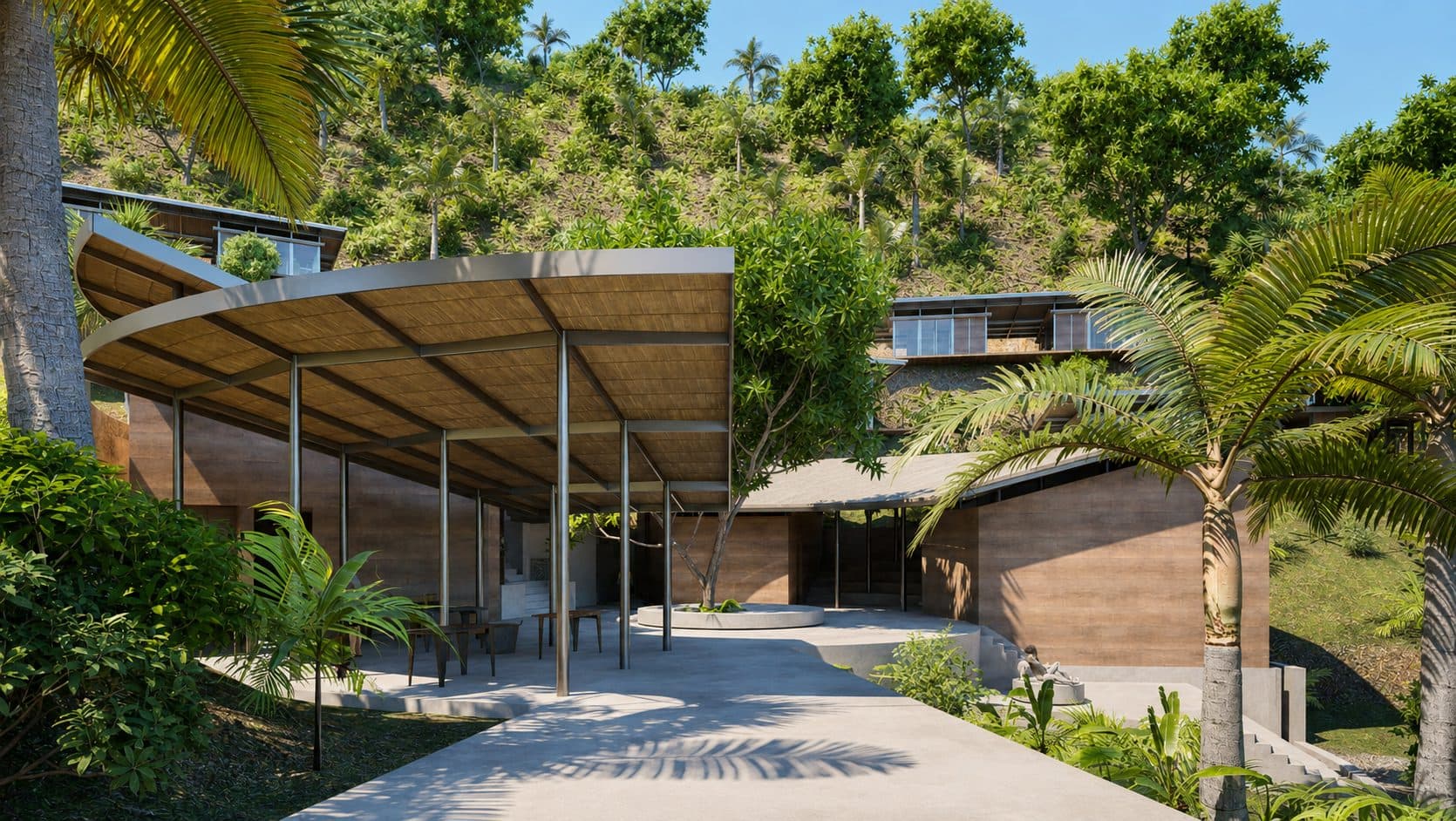
La construcción sostenible en el trópico es un problema distinto al de los climas templados. Siete prácticas específicas —diseño pasivo, materiales locales, sistemas de agua, detallado ante tormentas y más— que deciden si una villa caribeña es realmente sostenible o solo se comercializa como tal.
La construcción sostenible en el trópico no es el mismo problema que la construcción sostenible en Suiza o Vancouver. El clima es caluroso, húmedo y propenso a tormentas; la cadena de suministro es limitada; los estándares están en evolución. La respuesta correcta es un conjunto de prácticas específicas —diseño pasivo, los materiales adecuados, detallado orientado a la durabilidad— no una etiqueta ni una certificación.
Esta guía recorre siete prácticas que verdaderamente deciden si una villa caribeña es sostenible en algún sentido significativo, a partir de los estándares de construcción utilizados en Sienna Terrenas y del marco más amplio de desarrollo ecológico dominicano.
Puntos clave
- La construcción sostenible en el trópico es específica del clima: las prácticas que funcionan en Europa a menudo rinden por debajo de lo esperado en el Caribe, y viceversa.
- El diseño pasivo (orientación, ventilación, aislamiento) hace más por el consumo energético que cualquier sistema activo añadido después.
- Los materiales locales reducen el carbono incorporado y la fragilidad de la cadena de suministro; los adecuados superan a los importados en este clima.
- La gestión del agua es tan importante como la energía en el trópico; el detallado con grado antitormenta protege tanto la estructura como el valor a largo plazo.
- El equipamiento de bajo consumo de serie (iluminación LED, ventiladores de techo con control remoto, agua caliente de paso) consolida una eficiencia que no depende del comportamiento del propietario.
1. Primero el diseño pasivo, después los sistemas activos
La mayor palanca de sostenibilidad en la construcción tropical es lo que se hace antes de encender cualquier cosa. La orientación, la ventilación, el aislamiento y el sombreado establecen la carga energética base. Una vez que esa base está mal, ninguna cantidad de energía solar o de aire acondicionado eficiente lo arregla.
En Sienna, las villas se orientan para captar las brisas oceánicas predominantes. Los conjuntos de techado utilizan capas de fibra de coco y gravilla que superan a los techos convencionales solo de hormigón en este clima. Los techos son altos —el calor sube, y un techo de seis metros lo aleja de donde están las personas—. Los aleros y las terrazas con mallas dan sombra a los acristalamientos sin bloquear la ventilación.
El resultado es una villa donde, durante la mayor parte del año, en realidad no se necesita usar aire acondicionado durante el día. Esa es la victoria de sostenibilidad que se acumula: cada grado de enfriamiento pasivo es un grado que el aire acondicionado no tiene que aportar.
2. Selección de materiales: locales, regionales, de bajo consumo energético incorporado
Los materiales pesados enviados desde Europa o Norteamérica cargan con un costo de carbono desproporcionado y una cadena de suministro frágil. La tradición constructiva caribeña siempre ha usado lo que hay en la isla; la práctica sostenible moderna redescubrió ese principio.
Importan tres categorías:
- Fibras de plantas nativas para aislamiento y revestimiento, siendo la fibra de coco la más establecida en la construcción dominicana. Mejor desempeño térmico en este clima que la fibra de vidrio importada, menor carbono incorporado y resistencia natural a las plagas.
- Piedra y áridos extraídos regionalmente para cimientos y paisajismo. Reduce el carbono de transporte y apoya el suministro local. La piedra y la gravilla dominicanas se utilizan ampliamente en este nivel y son estructuralmente equivalentes a las importadas.
- Madera de ingeniería de fuentes caribeñas certificadas donde el uso estructural sea apropiado. Las maderas tropicales duras de crecimiento lento son duraderas en este clima de maneras en que las coníferas de clima templado no lo son.
La pregunta clave es: ¿de dónde proviene el material y cuánto cuesta ese trayecto? Los materiales que viajaron menos, casi siempre, tienen mejores números de sostenibilidad.
3. Los sistemas de agua no son opcionales
La energía acapara la mayoría de los titulares de sostenibilidad. En el trópico, el agua es un problema de igual peso.
Las prácticas que importan:
- Pavimentos permeables. Estacionamientos, senderos y accesos construidos con materiales permeables (adoquines ecológicos, gravilla, hormigón-césped) en lugar de hormigón sólido. El agua de lluvia se absorbe en el suelo en vez de concentrarse en una escorrentía dañina. En Sienna esto es una condición de licencia bajo la Licencia Ambiental N° 0644-26.
- Tratamiento de aguas residuales debidamente diseñado. En Sienna cada villa tiene su propio sistema individual de tratamiento, diseñado por solar: muchos sistemas independientes en lugar de una sola planta de la que dependa toda la comunidad. Bien ejecutado, protege el agua subterránea y los cursos de agua aguas abajo, y elimina el punto único de falla.
- Solo piscinas con sistema de sal. Las piscinas de cloro están prohibidas dentro del marco del proyecto, por la calidad del agua aguas abajo y por la experiencia del usuario. El aporte químico baja de forma material, y el agua resultante se siente diferente.
4. Preparación para energía solar frente a la adaptación posterior
La energía solar en el Caribe tiene una economía inusualmente favorable. Las Terrenas promedia aproximadamente ocho horas de luz solar aprovechable por día durante todo el año, y las tarifas eléctricas dominicanas hacen que los plazos de recuperación sean más cortos que en la mayoría de los mercados estadounidenses o europeos: la Agencia Internacional de la Energía sitúa la irradiancia solar del Caribe entre las más fuertes del hemisferio occidental.
La práctica de construcción sostenible no es "instalar energía solar". Es construir con preparación solar. Cada villa en Sienna se construye con la infraestructura estructural y eléctrica para instalar un arreglo fotovoltaico: capacidad de carga del techo, orientación, canalizaciones preinstaladas, ubicación del inversor. El propietario lo activa cuando está listo. La parte costosa —diseñar el edificio para aceptar la energía solar— se hace una sola vez, durante la construcción. Adaptarlo después cuesta materialmente más.
Este es el tipo de práctica que no aparece en un folleto pero que se acumula a lo largo de la vida del proyecto.
5. Detallado ante tormentas y de durabilidad
Una villa "sostenible" que queda medio destruida en una tormenta de categoría 2 no es, en un horizonte de 30 años, particularmente sostenible. La durabilidad es una métrica de sostenibilidad, y en el Caribe eso significa detallado ante tormentas.
Los detalles: marcos estructurales de hormigón armado con trayectoria de carga continua desde la cimentación hasta la viga del techo. Sistemas de techado diseñados para carga eólica sostenida con fijaciones de grado antihuracán. Acristalamientos con resistencia al impacto donde la exposición al viento lo requiera. Puertas de patio con resistencia antitormenta. El informe completo sobre resistencia a huracanes se aborda en nuestro artículo complementario sobre la construcción caribeña ante tormentas, pero el principio se sostiene aquí: la durabilidad es sostenibilidad.
6. Estándares de equipos obligatorios, no opcionales
La forma más limpia de consolidar la eficiencia es exigirla a nivel de los lineamientos de construcción, no depender de la elección del propietario. El marco de Sienna incluye:
- Iluminación LED en todo el proyecto: no se permiten incandescentes ni halógenas
- Salidas de aire acondicionado preinstaladas en cada habitación; equipos mini split inverter de alta eficiencia disponibles como upgrade
- Calentadores eléctricos de paso, que calientan solo el agua que realmente se usa
Estos no son objetivos aspiracionales. Son condiciones de los lineamientos de construcción. El beneficio es que la eficiencia no depende de qué equipo elija instalar un propietario en particular: se establece en la etapa de construcción y permanece establecida.
7. Gestión del terreno a nivel del sitio
Por último —y esta es la práctica que más se pasa por alto— la construcción sostenible a nivel de villa solo importa si el sitio mismo se gestiona de forma sostenible. Tres prácticas a nivel del sitio que realmente marcan la diferencia:
- Huella que respeta la topografía. Sin movimientos masivos de tierra. Las villas se escalonan con la pendiente, preservando el contorno natural y el dosel arbóreo existente donde sea posible. El aplanamiento masivo del sitio —común en el desarrollo caribeño— destruye precisamente los sistemas naturales con los que se supone que debe trabajar la construcción sostenible.
- Preservación de especies nativas y reforestación. Replantación de áreas comunes usando únicamente especies nativas; se prohíben las importaciones ornamentales. En Sienna, tres especies de la Lista Roja dominicana (Palma real, Gri-gri, Juan Colorado) están georreferenciadas individualmente y protegidas.
- Protocolos de residuos de construcción. Cada contratista firma un Anexo Contractual Ambiental que lo obliga a usar canales de disposición autorizados para escombros, residuos peligrosos, aceites y químicos.
Estos son detalles administrativos que deciden si el proyecto es sostenible en algún sentido verificable. El marco LEED del USGBC trata la selección del sitio y la gestión del terreno como fundamentales, y el contexto tropical caribeño solo agudiza esa exigencia.
La versión más corta
La construcción sostenible en el Caribe no es una sola cosa. Son siete cosas, superpuestas: diseño pasivo, materiales locales, gestión del agua, preparación solar, detallado ante tormentas, equipos obligatorios y cuidado del terreno a nivel del sitio. Un proyecto que hace algunas de ellas no obtiene la etiqueta de sostenibilidad a medias: la obtiene por el conjunto completo.
El detalle completo del lado constructivo en un solo lugar está en el pilar de vida sostenible, y la evidencia del marco legal (condiciones de licencia, porcentajes de áreas verdes, especies protegidas) se encuentra en /sustainability. Para recorrer una villa y ver cómo se traduce la especificación, organice un Discovery Tour.
Mantente al día
¿Tienes preguntas sobre esto?
Habla directamente con nuestro equipo de ventas — te responderemos por WhatsApp o por teléfono.
Escrito por
Sienna Terrenas Editorial Team
The Sienna Terrenas editorial team covers buying, owning, and living in Las Terrenas, Dominican Republic — from the purchase process and CONFOTUR tax strategy to villa construction and Caribbean community life, drawing on the team's on-the-ground experience in the area. Conoce al equipo de Sienna Terrenas.


